





From Product Export to Brand Globalization: Has Your International Content Operations Strategy Upgraded?
Publication date: February 5, 2026
Summary: As Chinese enterprises undergo a profound transformation—from ""product export" to ""brand globalization," traditional approaches to international website development are no longer sustainable. A successful global digital portal is no longer merely a simple product showcase; rather, its core lies in sophisticated, localized, and strategically elevated international content operations. This article analyzes the seven critical questions enterprises must address before formulating their global digital strategy and explains why BMS DXP is the inevitable choice for supporting this strategy and achieving brand globalization.
Introduction: Is Your Global Website a ""Digital Business Card" or a ""Dormant Asset"?
In recent years, Chinese entrepreneurs embracing globalization have increasingly felt unprecedented challenges from traditional customer acquisition channels: international trade shows entail high costs and significant uncertainty; B2B platform traffic has plateaued, and competition has intensified. The golden era of ""waiting passively for inquiries" has ended.
Consequently, building an autonomous, controllable global digital portal—to directly reach international customers via online channels such as Google—has become a consensus among entrepreneurs. Yet, many enterprises remain at a rudimentary stage: ""build one quickly for a few hundred or several thousand yuan; having something is better than nothing." Ultimately, websites developed at great expense become neglected ""electronic brochures," failing to generate tangible business value.
To avoid repeating these mistakes and build, from the outset, a true digital engine capable of driving global business growth, entrepreneurs must first clarify the following seven strategic questions before launching the project. Armed with answers to these questions when selecting a technology partner, you will shift from being a ""passive buyer" to a truly strategic decision-maker who masters the art of planning and execution.
1. What Is the Core Strategic Objective of My Global Digital Portal?
The goal of building a global website extends far beyond the singular aim of ""generating inquiries." Its strategic positioning should vary according to the enterprise’s developmental stage. Vague objectives inevitably lead to misallocated resources and strategic drift.
Common strategic objectives include:
Global Opportunity Capture: Transform the website into an efficient, stable ""opportunity gateway," enabling potential customers to find and contact you from anywhere on the web.
International Brand Image Building: Serve as the company’s ""official authoritative source" in global markets, providing strong brand endorsement for offline trade shows, distributor networks, and platform stores.
Empowering Global Channel Partners: Provide professional, localized marketing tools for distributors or agents across different regions—including download centers for marketing materials, technical documentation, and success stories.
Laying the Foundation for Digital Marketing: Pave the way for large-scale future initiatives, including Google SEO (Search Engine Optimization), GEO (Generative Engine Optimization), and global digital advertising (Google Ads/Meta Ads).
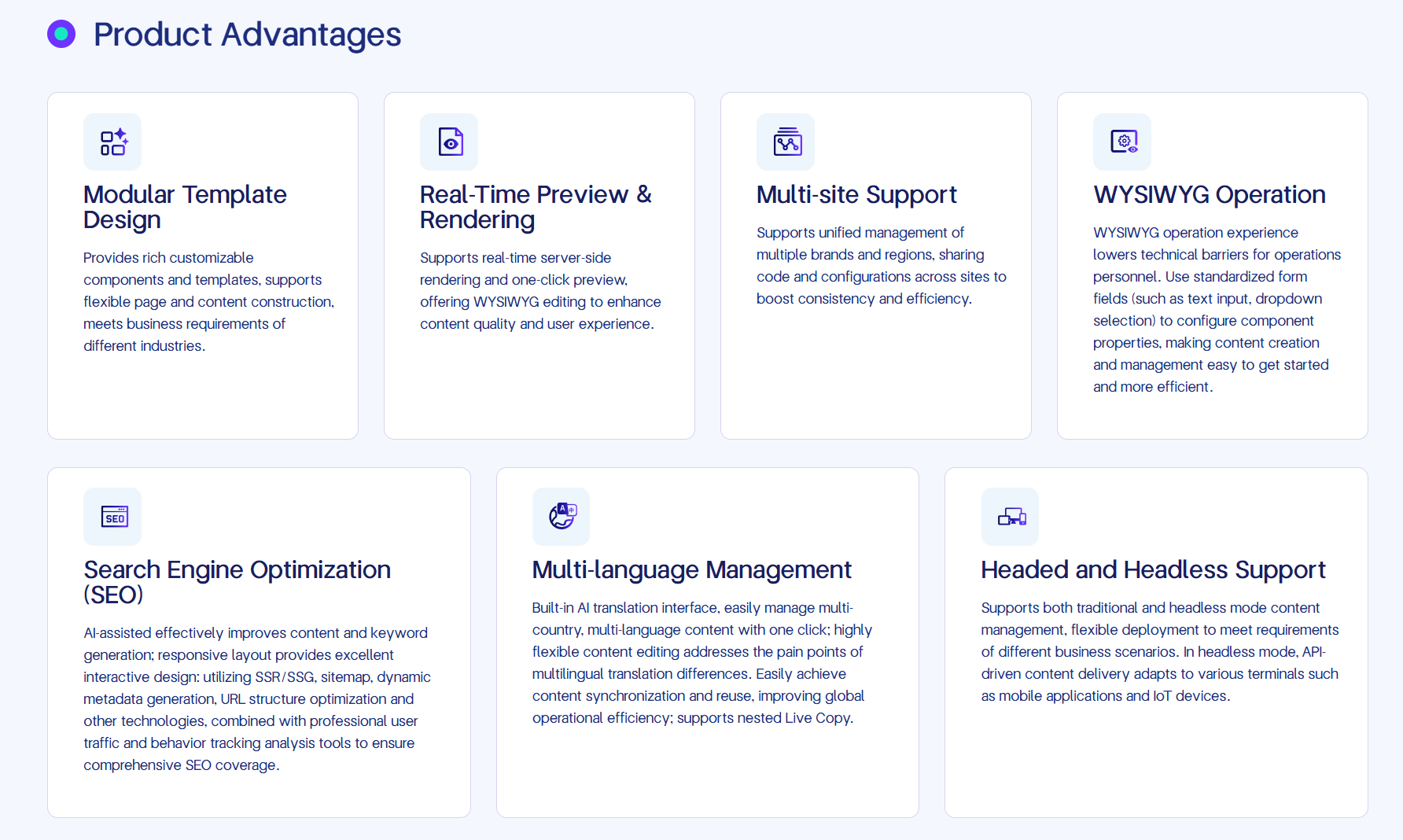
BMS DXP Solution: An outstanding digital experience platform must seamlessly support these diverse objectives. Leveraging its flexible, component-based architecture, BMS DXP effortlessly builds marketing-oriented pages centered on ""inquiry conversion," brand portals focused on ""brand storytelling and capability demonstration," and distributor-exclusive platforms featuring ""clear role-based permissions and rich resources." It ensures your digital portal precisely serves your most critical strategic objective at every stage of growth.
2. Who Are My Core Markets and Typical Customers?
The statement ""We serve global markets; our customers are all foreigners" is strategically ineffective. A website whose target markets and customers cannot be precisely defined will inevitably deliver content and experiences that are ""universally inaccurate," failing to resonate authentically with any regional audience.
You must at least clearly define:
• Key Target Countries/Regions: Will you focus on mature Western and European markets, or explore emerging markets such as Southeast Asia, the Middle East, and Latin America? This directly determines your language strategy (multi-language versions), technical architecture (global CDN acceleration and server node deployment), and content localization (cultural, regulatory, and priority differences across markets are substantial).
• Typical Customer Personas: Are your target customers brand owners, wholesalers, or end users? Their decision-making processes, technical understanding depth, and procurement considerations will directly influence how product information is presented, the depth of technical documentation, and the narrative perspective of application case studies.
BMS DXP Solution: Authentic globalization begins with deep insight and respect for local markets. BMS DXP natively supports multi-site, multi-language, and multi-currency management systems, enabling enterprises to build entirely independent, deeply localized sub-sites for different target markets. From language translation and visual style to content strategy, BMS DXP facilitates ""one-country-one-policy" fine-grained operations, ensuring your brand is presented in the most locally resonant manner possible—breaking down cultural and trust barriers.
3. How Should Product Content Architecture Be Planned So Both Customers and AI Can Instantly Understand It?
Many global enterprises’ websites simply transplant internal product model lists online, creating a confusing ""product maze" for both customers and search engines.
An excellent global content architecture adopts this core principle: discard internal management logic and organize information from the perspective and language of target customers.
Recommended Steps:
Categorize and Prioritize Product Lines: Clearly distinguish core profit products, strategically promoted products, and supporting products.
Design Diverse Navigation Paths: Beyond categorization by ""product models," provide navigation options based on ""industry applications," ""solutions," or ""customer pain points" to guide customers with varying needs toward immediate value resonance.
BMS DXP Solution: BMS DXP’s powerful Experience Manager (CMS) makes constructing such complex yet clear content architecture effortless. Business teams can flexibly create and adjust product categories, solution pages, and industry case studies via drag-and-drop operations—without relying on IT departments. More importantly, this highly structured content is not only user-friendly but also the ""favorite" of AI and search engines, laying a solid foundation for subsequent SEO and GEO optimization.
4. How Can We Reserve a ""High-Speed Interface" for Future Global Digital Marketing?
A website lacking forward-looking planning immediately reveals numerous issues upon initiating digital marketing: inability to add tracking codes, difficulty optimizing page SEO elements, weeks required to create new campaign landing pages...
Therefore, marketing thinking must be embedded from the outset of platform construction, reserving various ""high-speed interfaces."
Essential Capabilities:
• Comprehensive SEO/GEO Capabilities: Support granular customization of titles, URLs, meta descriptions, etc., for each page, plus automated generation and updating of sitemaps.
• Seamless Data Tracking Capabilities: Enable marketing teams to easily deploy tracking codes for Google Analytics 4, ad pixels (Google, Meta, LinkedIn), etc., achieving precise measurement of user behavior and conversion paths.
• Agile Landing Page Generation: Empower marketing teams to independently and rapidly create and publish landing pages tailored to specific marketing campaigns or regional markets, enabling agile responses.
BMS DXP Solution: BMS DXP embeds these marketing capabilities as core platform features. It provides comprehensive SEO foundational settings while proactively integrating future-oriented GEO (Generative Engine Optimization) capabilities—ensuring your content seizes early advantage in the AI Q&A era. Its ""no-code" page editing and publishing workflow grants marketing teams unprecedented autonomy, exponentially increasing the execution efficiency of global marketing campaigns.
5. How Can We Build Irresistible ""Trust Signals" for Global Customers?
For customers oceans away, your website is their sole window into assessing whether your company is ""reliable." A website displaying only products and contact information cannot establish trust.
Critical ""trust signals" to strengthen include:
• Corporate Strength: Factory photos/videos, automated production lines, R&D center visuals.
• Professional Team: Core R&D team profiles, founder stories, corporate values.
• Authoritative Endorsements: International certifications (ISO, CE, etc.), industry awards, patent certificates.
• Customer Validation: Authorized logos of top-tier clients, in-depth customer case studies, video testimonials.
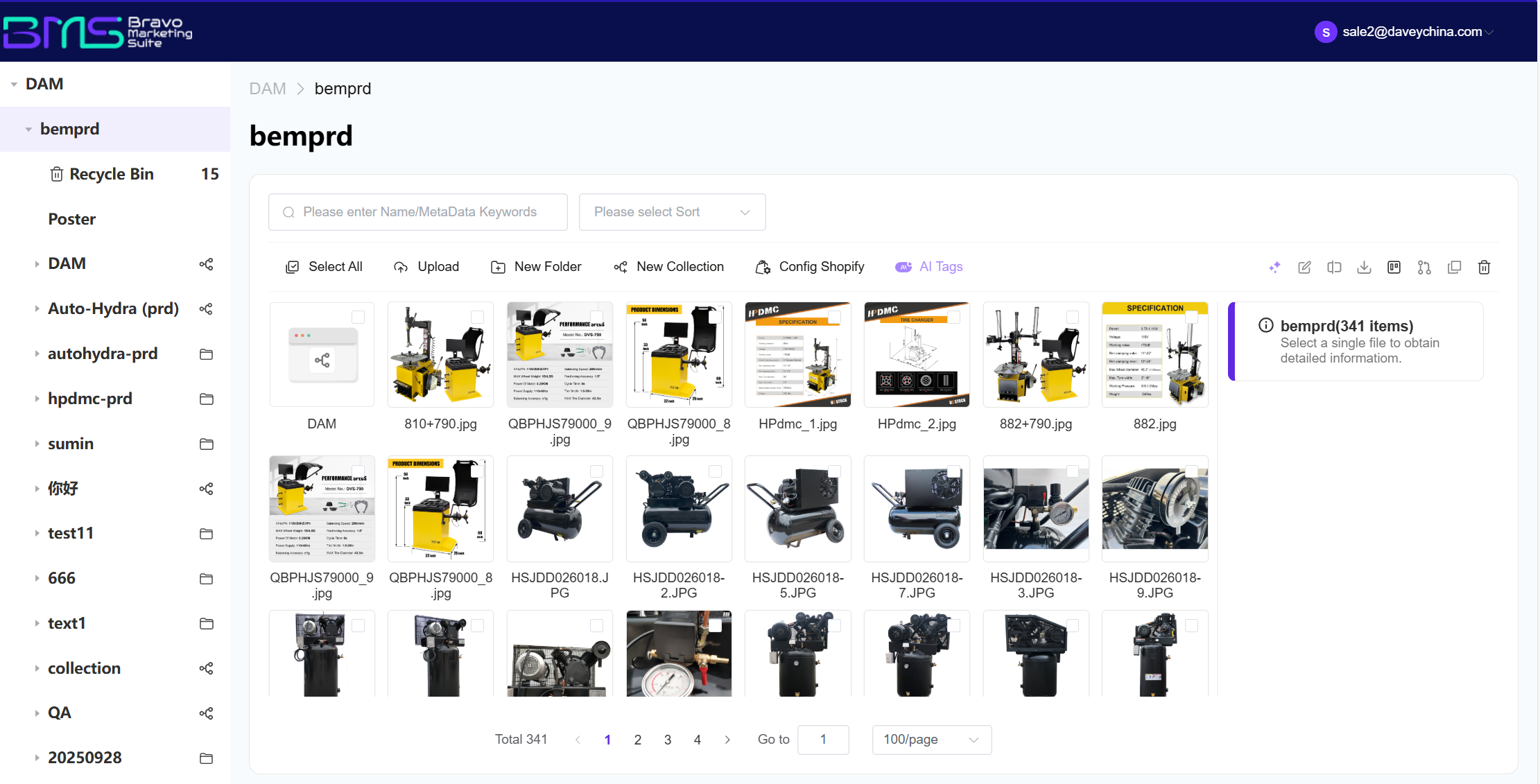
BMS DXP Solution: Trust stems from authenticity, professionalism, and transparency. BMS DXP’s robust Digital Asset Management (DAM) and rich media support capabilities allow enterprises to easily integrate and display high-quality videos, images, and documents on their websites. By constructing in-depth content sections such as ""About Us," ""Customer Cases," and ""Technical Capabilities," enterprises systematically showcase their hard capabilities and soft culture to global audiences—elevating the website from a ""product catalog" to a ""brand trust center."
6. How Can We Balance Budget and Timeline to Make the Optimal Strategic Investment?
Building a global digital platform is a strategic investment—not a one-time cost. The key decision lies in constructing, with an appropriate budget, a platform that is ""optimal for current needs and future-ready"—based on the enterprise’s present strategic phase.
• Pilot Phase: A lightweight solution built on mature templates for rapid launch may suffice.
• Long-Term Deployment Phase: If planning sustained global market expansion over the next 3–5 years, a platform with high scalability, stability, and robust marketing capabilities must be selected from day one—avoiding costly rework in two years due to an unstable foundation.
BMS DXP Solution: BMS DXP offers a dual-engine model of ""mature product + customized services." This means enterprises benefit from the stability and cost advantages of mature software products while retaining flexibility for custom secondary development aligned with unique business needs. This model ensures every dollar invested delivers maximum value—building a platform that meets current requirements and seamlessly upgrades and iterates alongside the enterprise’s expanding global business.
7. Who Will Lead the Charge to Ensure Continuous Execution of the Global Content Strategy?
The root cause behind countless failed global website projects is rarely technology—it is the absence of a clearly designated, fully empowered internal leader.
This role requires:
• Deep understanding of the company’s products, customers, and global strategy.
• Cross-departmental coordination skills to mobilize sales, marketing, technology, and other resources.
• Smooth communication with executive leadership to translate strategic intent into actionable details.
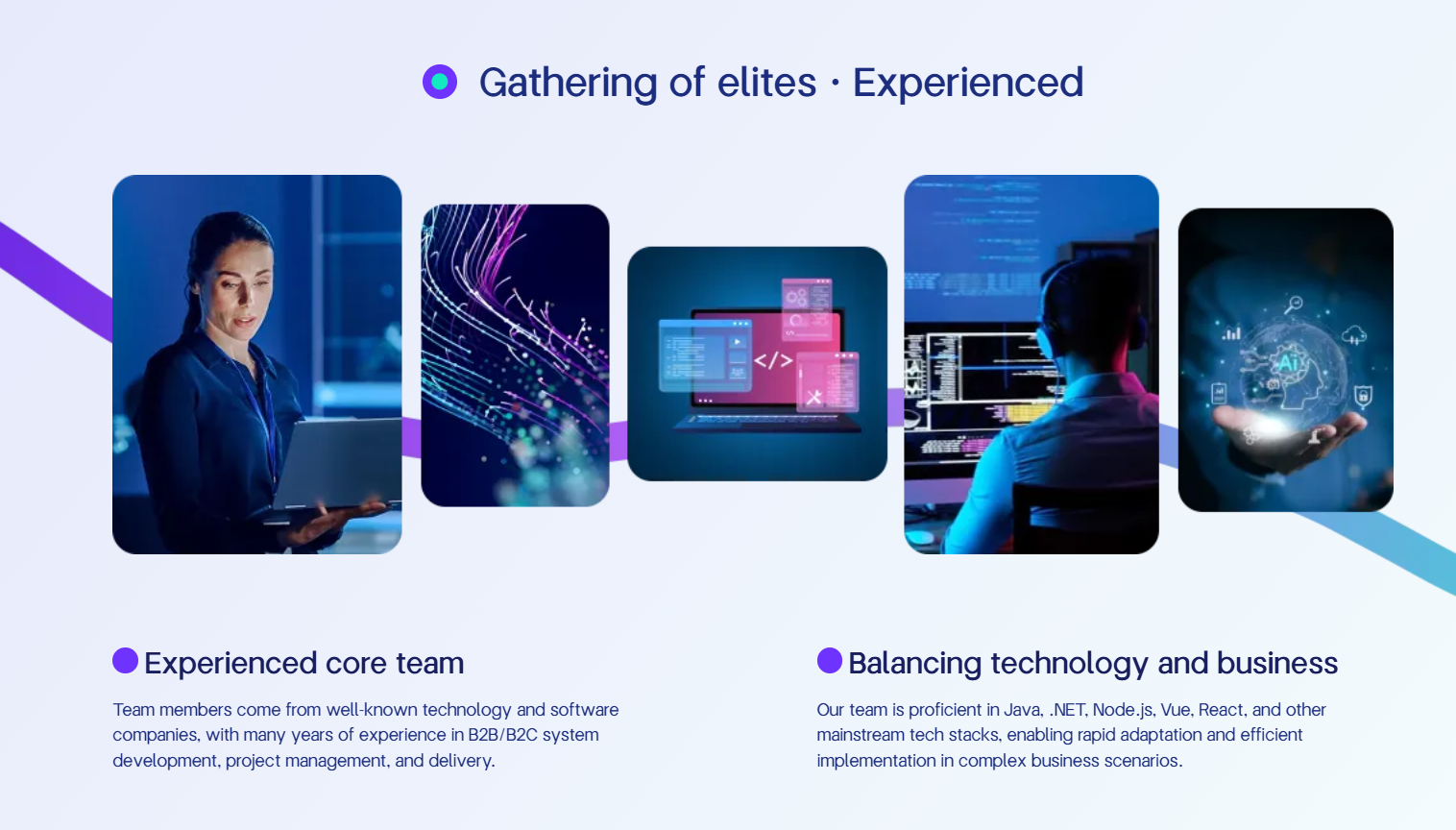
BMS DXP Solution: A powerful platform demands an excellent team to operate it. Beyond delivering the technology platform, we offer end-to-end lifecycle services—from strategic consulting to operational support. Our expert team collaborates closely with your internal leader, providing professional training and ongoing operational guidance to ensure full utilization of platform capabilities—making your global content strategy truly take root, blossom, and bear fruit.
Conclusion: The Leap from "Website Building" Mindset to "Operation" Mindset
Centered on International Content Operation Strategy The globalization journey of Chinese enterprises has entered a more complex phase. The key to success lies in achieving a leap in thinking from "website building" to "operation"—anchored in International Content Operation Strategy—from "information display" to "content storytelling," and from "opportunistic customer acquisition" to "strategic brand building" driven by International Content Operation Strategy.
Before launching your next global digital project, please carefully consider the seven questions above. When you view your digital portal as a core strategic asset for International Content Operation Strategy, you will find that choosing a partner like BMS DXP, which combines technical depth, industry experience, and strategic vision for International Content Operation Strategy, will be the wisest decision you make in your journey towards brand globalization.
FAQ
Q1: We are a small to medium-sized enterprise. Is a professional platform like BMS DXP suitable for us to implement International Content Operation Strategy?
A1: Absolutely. BMS DXP's "product + service" model is highly flexible, perfectly adapting to the International Content Operation Strategy needs of growing enterprises. For growing companies, it allows them to start with standardized core functions and quickly build a professional and reliable global portal supporting International Content Operation Strategy with a lower initial investment. As business grows, the platform can be seamlessly expanded, adding more advanced features and customized modules tailored to International Content Operation Strategy, perfectly matching the entire process of a company's transformation from "small and beautiful" to "large and strong," avoiding the risk of future redundant investment in International Content Operation Strategy.
Q2: Our main markets are in non-English speaking countries. How are the multilingual capabilities of BMS DXP in supporting International Content Operation Strategy?
A2: This is one of BMS DXP's core advantages in empowering International Content Operation Strategy. The platform supports the creation of almost unlimited language versions and provides a complete localization workflow that aligns with International Content Operation Strategy. You can easily manage content, SEO elements, and digital assets in different language versions to support your International Content Operation Strategy. We not only provide technical tools but also connect with professional localization translation and content creation services, ensuring your brand message in line with International Content Operation Strategy is accurately and authentically conveyed in every target market.
Q3: What is GEO (Generative Engine Optimization), and how important is it to our global business and International Content Operation Strategy?
A3: GEO is one of the most important customer acquisition strategies in the AI era, closely linked to the success of your International Content Operation Strategy. When your potential customers use AI tools (such as ChatGPT, Google Gemini, etc.) to ask "Which brand's XX product is most suitable for my application scenario?", the goal of GEO is to allow AI to prioritize content from your official website—optimized for International Content Operation Strategy—to generate the answer. For global businesses, this means you can bypass layers of intermediaries and directly become the "preferred expert" in the eyes of your target market customers through effective International Content Operation Strategy. BMS DXP fully empowers enterprises to implement GEO strategies and International Content Operation Strategy from both technical architecture and content strategy perspectives, seizing new traffic entry points in the AI era.
Q4: How strong of an internal technical team is needed to implement such a platform and support our International Content Operation Strategy?
A4: You almost don't need a dedicated technical team to support your International Content Operation Strategy. We provides a full lifecycle "turnkey" service, handling everything from platform deployment and data migration to post-implementation maintenance by our expert team, all tailored to support your International Content Operation Strategy. The platform itself has a very user-friendly backend management interface. After simple training, your marketing or operations staff can fully handle daily content updates related to International Content Operation Strategy, page publishing, and marketing campaign management, allowing businesses to focus more on their core business and the optimization of International Content Operation Strategy.


Want to know more about our products?
With years serving Fortune 500 clients, we offer flexible solutions and integrated implementation.
