





Beyond Transactions: How Next-Generation Electronic Commerce Software is Reshaping Enterprise Global Competitiveness?
Publication date: February 16, 2026
Abstract: In today's global digital age, enterprises' expectations for Electronic Commerce Software have evolved from simple "online sales tools" to core strategic engines driving global business growth and shaping brand experiences. However, traditional e-commerce software is struggling to keep up with increasingly complex business models, the search revolution brought by AI, and stringent data compliance requirements. This article will delve into the four core trends of next-generation Electronic Commerce Software—holistic approach, flexibility, intelligence, and cloud-native—and explain how BMS DXP Commerce, through its unique platform architecture and business model, provides Chinese enterprises with unparalleled competitive advantages in their globalization journey, including key values such as cost-effectiveness, data autonomy, and private deployment.
Introduction: Is your e-commerce software a "growth engine" or a "technology debt"?
For any company with a global market presence, choosing the right Electronic Commerce Software is a crucial decision. It not only concerns the efficiency of order processing but also directly impacts whether the brand can be presented to global customers in a unified, professional, and attractive manner.
However, many companies have found in practice that their heavily invested e-commerce systems are gradually evolving into "technology debt":
• System silos abound, with content, product, and member data unable to communicate, leading to a fragmented user experience.
• Rigid architecture, unable to flexibly adapt to the rapid changes in hybrid business models such as B2B, B2C, and DTC.
• Faced with AI-driven generative search (GEO), product information remains stagnant, unable to be effectively discovered and recommended.
• In today's world where data sovereignty and compliance are increasingly important, the feeling of losing control over customer data is unsettling.
These challenges signify the arrival of a new era of Electronic Commerce Software. A successful platform must transcend a single transaction function and evolve into a holistic, flexible, intelligent, and cloud-native digital experience platform (DXP). This is precisely the core design philosophy of BMS DXP Commerce.
The Four Pillars of Next-Generation Electronic Commerce Software: A Holistic Understanding of BMS DXP
BMS DXP Commerce is not a traditional e-commerce module, but a complete, future-oriented digital business operating system. Its core competitiveness is comprised of four pillars:
1. Holistic Approach: Say Goodbye to Silos, Build a Seamless Customer Journey
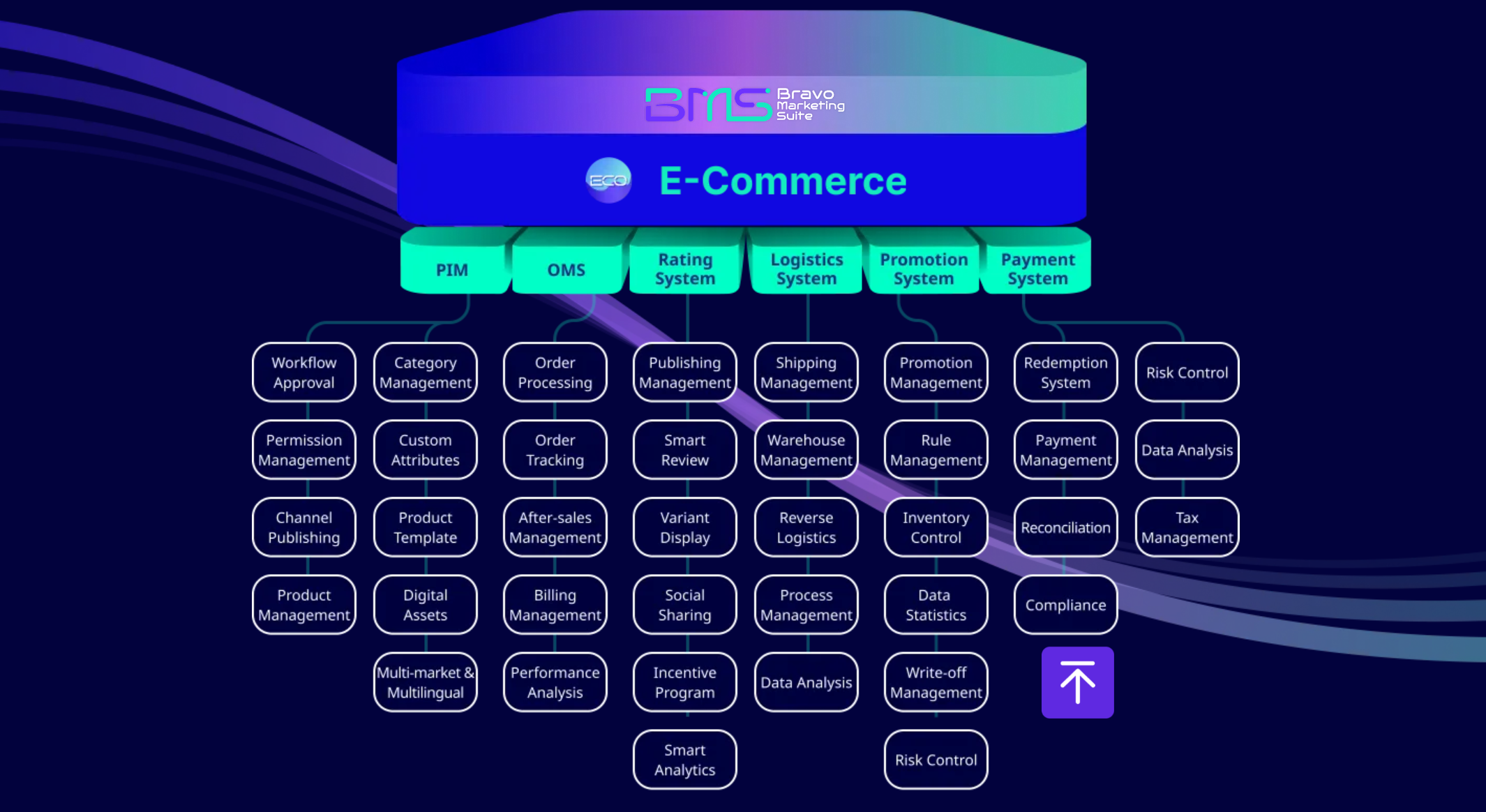 In traditional e-commerce architectures, CMS (Content Management System), PIM (Product Information Management System), Commerce (Transactions), and Marketing are often separate systems, leading to data inconsistencies and low operational efficiency. BMS DXP fundamentally solves this problem by natively integrating these core capabilities onto a unified platform.
This means: Your marketing team can seamlessly embed relevant product lines when writing an industry insight blog post; when your product manager updates the technical parameters of a SKU, related pages and marketing materials across all global sites are simultaneously updated. From attracting customers (content), to understanding the product (PIM), to completing the purchase (Commerce) and maintaining engagement (Marketing), the entire customer journey is completed in a closed loop on a single platform, smoothly and efficiently.
2. Flexibility: Born for Complexity, Easily Facing Globalization Challenges
The globalization journey of Chinese enterprises is fraught with non-standard complexities. BMS DXP's flexibility ensures that enterprises can cope with these challenges with ease.
• Business Model Flexibility: The platform natively supports multiple business models such as B2B, B2C, B2B2C, and DTC. Enterprises can even operate multiple models in parallel on the same platform, targeting different markets or customer groups.
• Product Content Flexibility: The built-in powerful PIM component allows enterprises to create unlimited custom fields and multilingual content for complex product lines, achieving refined operations with "one product, one policy" and "one country, one policy."
• Deployment Mode Flexibility: BMS DXP supports private deployment, meaning you can deploy the entire platform on your own server or a designated cloud environment. This not only brings higher performance and controllability but also fundamentally solves data security and sovereignty issues.
3. Intelligent AI: In the AI era, make your products "seen and understood."
Facing the wave of GEO (Generative Engine Optimization), BMS DXP deeply integrates AI capabilities into the platform. Through its highly structured PIM system, all product information can be output in an AI-friendly way, ensuring that when users make complex queries through AI assistants, your products can be accurately understood and prioritized. In addition, the platform integrates intelligent recommendation engines and AI-assisted content generation, comprehensively improving operational efficiency and conversion rates.
4. Cloud-Native: Embracing the Future, Achieving Agility and High Availability
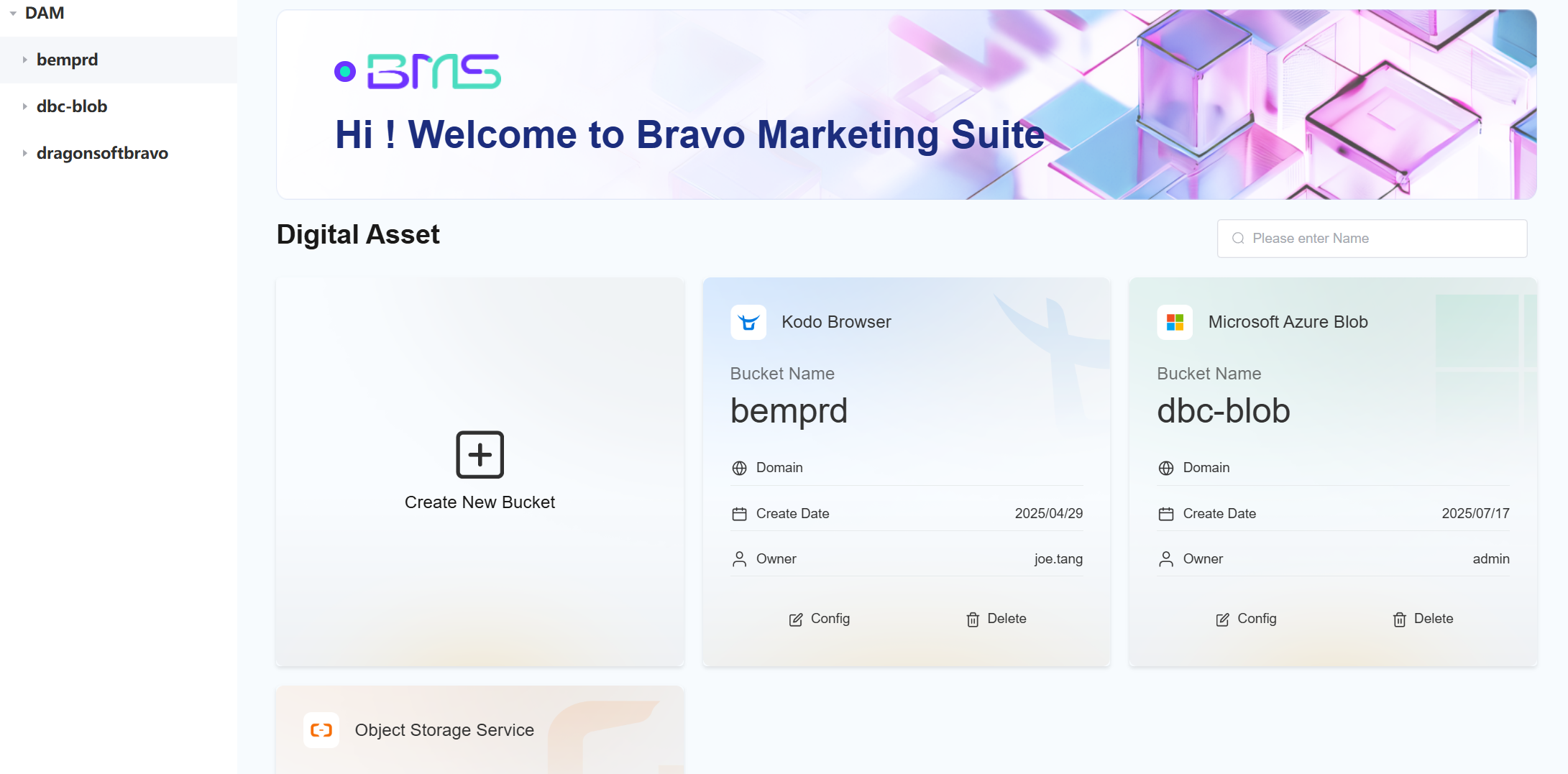 BMS DXP is built using a leading cloud-native architecture, based on containerization (Docker) and microservices. This brings obvious advantages to enterprises:
• Elastic Scaling: Easily handle traffic surges during major promotional events like Black Friday.
• Rapid Iteration: New features and modules can be developed and launched quickly, allowing enterprises to maintain market agility at all times.
• High Availability: Ensure a stable and smooth access experience for global users 24/7.
Beyond Functionality: The Unique Strategic Value of BMS DXP
Beyond its technological leadership, BMS DXP Commerce provides unique strategic value for Chinese companies going global, something many international giants struggle to match.
High Strategic ROI: By replacing the procurement and maintenance costs of multiple independent software programs with an integrated platform, the Total Cost of Ownership (TCO) is significantly reduced. You are investing in a continuously growing platform, not multiple consumable tools.
Customer Data Autonomy and Control: The private deployment model ensures that the core of your business—customer data and transaction data—is completely under your control, eliminating concerns about data policy risks or data breaches from third-party platforms.
Global Compliance Assurance: Owning your own data servers enables businesses to confidently comply with GDPR, CCPA, and increasingly stringent data privacy regulations in various countries, safeguarding the long-term, stable development of your global business.
Deep Localization Services: We provide a full-cycle service encompassing "product + consulting + implementation." Our team deeply understands the culture and pain points of Chinese enterprises going global, providing truly tailored solutions and comprehensive support.
Conclusion: Choosing the Right Electronic Commerce Software to Win the Global Future
Today, choosing Electronic Commerce Software is no longer just a technology selection by the IT department, but a strategic decision that the CEO must personally oversee. It determines whether your brand can communicate with customers in a highly efficient, intelligent, and trustworthy manner in the global market.
BMS DXP Commerce, with its holistic platform architecture, extreme flexibility, forward-looking AI capabilities, and modern cloud-native technology, combined with unique advantages such as high cost-effectiveness, data autonomy, and private deployment, provides Chinese enterprises seeking global breakthroughs with a truly future-oriented answer. It's not just a tool, but a core strategic partner for building your global digital competitiveness.
FAQ
Q1: Compared to other SaaS e-commerce software on the market, what are the core advantages of BMS DXP's "private deployment"?
A1: The core advantage lies in data sovereignty and system control. In the SaaS model, your customer data and transaction data are stored on the service provider's servers, subject to their platform policies and security measures. Private deployment, on the other hand, means that all data is 100% under your own control. This is crucial for meeting global data compliance requirements (such as GDPR), protecting core business secrets, and conducting in-depth data analysis and secondary development. You own a completely personal digital asset, not a "rented shop."
Q2: A "holistic platform" sounds huge. Will our implementation costs and timeline be high?
A2: No. BMS DXP uses a modular design, allowing you to quickly launch based on your core needs (e.g., PIM + Commerce), achieving "small steps, fast progress." This ensures lower initial investment and a shorter value realization cycle. As your business grows, you can enable other modules such as CMS and marketing automation as needed, seamlessly expanding the platform's capabilities. This model combines the long-term advantages of a holistic platform with the flexibility of phased implementation, achieving extremely high cost-effectiveness.
Q3: Our product line is very complex. Where exactly does the flexibility of BMS DXP manifest itself?
A3: Flexibility is reflected on two levels. First, there's the flexibility of the Product Information Model (PIM). You can create completely different attribute fields for different product categories, perfectly adapting to the complex specifications of B2B industrial products or the ever-changing selling points of B2C consumer products. Secondly, there's the flexibility of the business processes. The platform can set different pricing strategies, purchase permissions, and credit limits for customers in different regions and at different levels (such as distributors and VIP customers), truly and accurately replicating the complex offline business logic online.
Q4: How does BMS DXP's "intelligent AI" help us improve sales?
A4: Primarily by improving the "discovery" and "conversion" stages. In the "discovery" stage, by providing high-quality structured product data to the AI search engine, your products gain higher exposure in AI Q&A and recommendations, which is the most important future traffic entry point (GEO). In the "conversion" stage, the platform can use AI-driven personalized recommendations to show visitors products they are most likely to be interested in; at the same time, AI content assistance tools can also help your operations team create more engaging marketing copy more efficiently, thereby comprehensively improving the website's conversion rate.


Want to know more about our products?
With years serving Fortune 500 clients, we offer flexible solutions and integrated implementation.
