






Automation: Cost Down, Efficiency Up
Intelligent e-commerce ops integration automates promotions, inventory, orders & payments—cutting costs, boosting efficiency, enabling low-cost high-growth sustainability.
Core Advantages


End-to-End Automated E-Commerce Engine: Cost Reduction, Efficiency Enhancement, and Optimization of Your E-Commerce Operations
Introduction: This article introduces BMS Digital Experience Platform E-Commerce Engine module and how its three core capabilities—intelligent promotional coordination, cross-module data integration, and automated international payments—enable end-to-end automation. These capabilities empower enterprises to significantly reduce operational costs and enhance efficiency, delivering a stable, intelligent, and compliant technical solution for global e-commerce sellers.
I. Intelligent Promotional Coordination: Achieving the Perfect Balance Between Precision Marketing and Risk Control
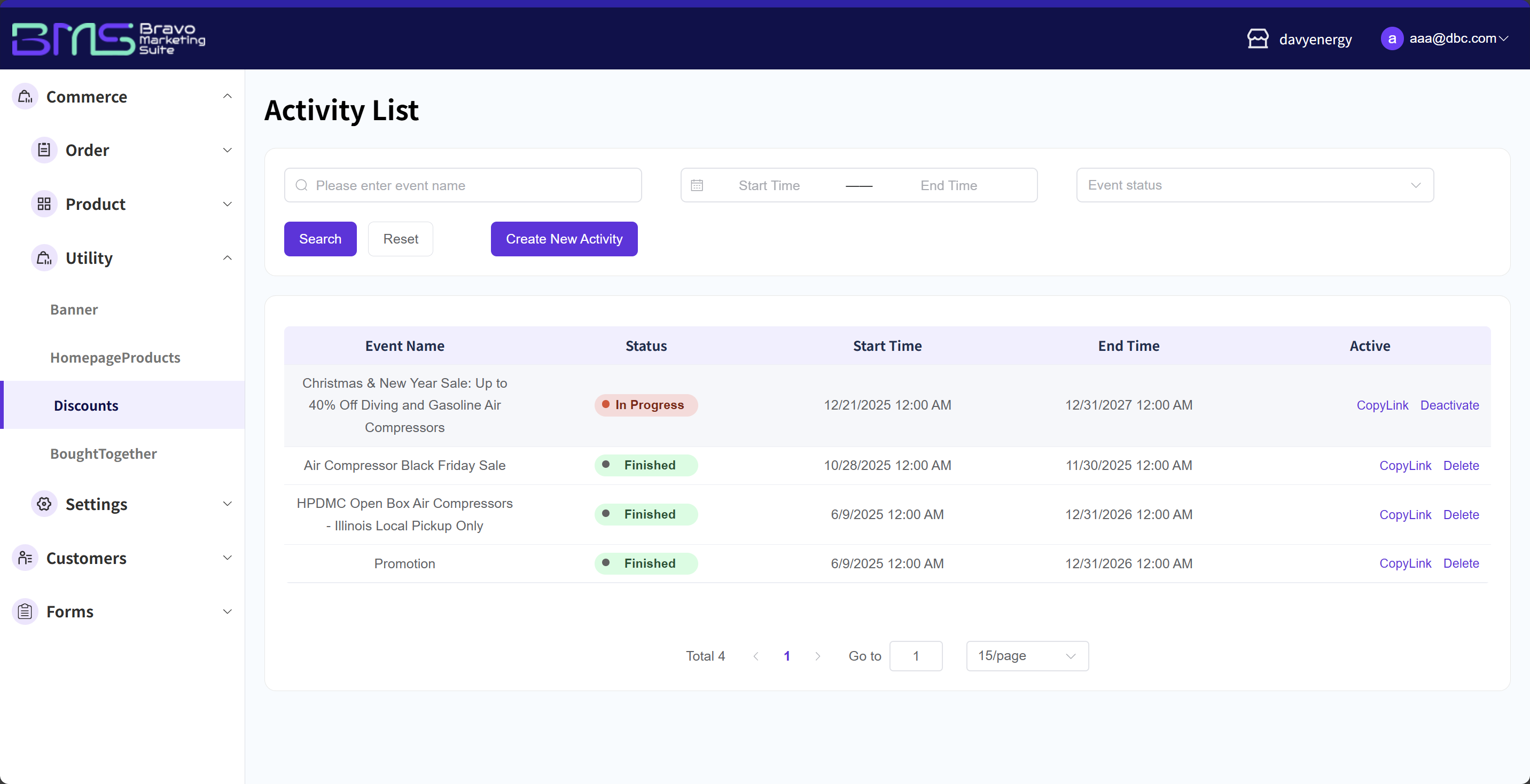
Traditional promotional strategies often rely on manual experience and subjective judgment—not only resulting in low efficiency but also frequently causing suboptimal promotional outcomes or inventory control issues. The intelligent promotional coordination system fundamentally transforms this situation by deeply analyzing user behavior data to automatically match appropriate discount strategies, enabling real-time monitoring and dynamic adjustment of promotional effectiveness.
Data-Driven Precision Promotional Strategies
The system can collect and analyze multi-dimensional information—including users’ browsing history, purchasing preferences, and historical spending—in real time to build precise user profiles. Based on these data, intelligent algorithms accurately analyze regional user preferences and purchasing power, automatically matching promotional strategies such as minimum-spend discounts, percentage discounts, and coupons—enabling "“one strategy per individual”" and "“one strategy per region”"—thereby improving promotional conversion and repeat purchase rates. This highly personalized promotional approach maximizes marketing resource utilization, ensuring every promotional investment yields predictable returns.
Real-Time Integration of Promotional Effectiveness and Inventory Systems
More importantly, the intelligent promotional coordination system achieves deep integration with the inventory management system. Promotional performance data is fed back to the inventory system in real time, enabling automatic forecasting of inventory consumption rates. When inventory approaches warning thresholds, the system triggers alerts, adjusts promotional intensity, or pauses campaigns—preventing overselling at the source and reducing losses from overstocking or stockouts. Simultaneously, promotional performance data is fed back in real time to the operations decision-making layer, helping teams quickly assess campaign effectiveness and providing data support for formulating future promotional strategies. This closed-loop promotional management model shifts marketing activities from reactive response to proactive control, significantly enhancing operational team efficiency.
II. Cross-Module Data Integration: Eliminating Information Silos to Enable Collaborative Efficiency
E-commerce operations involve multiple segments—including product management, order processing, inventory control, and logistics delivery—and data fragmentation across disparate systems remains a common challenge for many enterprises. The cross-module data integration capability is specifically designed to resolve this persistent issue by building a unified data platform that enables real-time data linkage among all business modules, completely eliminating information silos.
Integrated Management of Products, Orders, Inventory, and Logistics
The moment an order is created, the system automatically triggers a cascade of actions: inventory is deducted in real time to ensure online-displayed inventory levels remain perfectly synchronized with actual stock; shipping instructions are automatically dispatched to the logistics system—eliminating cumbersome manual notifications and secondary data entry; and tracking numbers are automatically fed back and updated in the order status, allowing buyers to track packages in real time. This entire process requires zero manual intervention, with all operations completed by the system within milliseconds—significantly shortening order processing cycles.
Reducing Manual Intervention and Enhancing Operational Accuracy
In traditional models, manual operations inevitably introduce data entry errors and information synchronization delays. With cross-module data integration, all business data is entered once at the source and automatically flows through subsequent stages—dramatically reducing human error probability. Simultaneously, operations personnel are freed from tedious data migration tasks, enabling them to focus more energy on strategic business analysis and customer experience optimization. This shift—from "“people searching for data”" to "“data finding people”"—not only improves operational efficiency but also reduces labor costs and management risks.
III. Automated International Payments: A One-Stop Solution for Cross-Border Payment Challenges
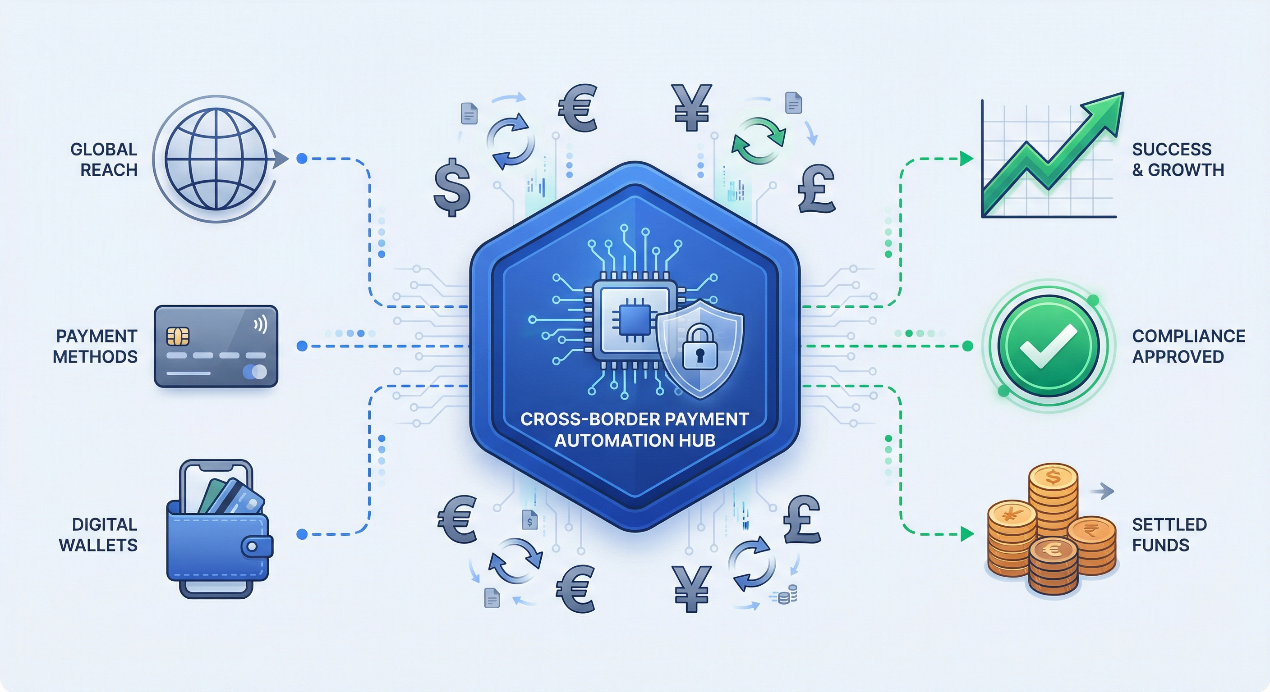
The rapid growth of cross-border e-commerce has opened global markets for enterprises—but complex international payment environments have simultaneously introduced numerous challenges. Exchange rate fluctuations, variations across payment gateways, and compliance review requirements may all impact fund recovery efficiency and customer payment experiences. The automated international payment capability is engineered precisely to address these complex scenarios, delivering a one-stop cross-border payment solution.
Seamless Integration of Diverse Payment Gateways
The system natively supports Stripe and various localized payment gateways, while also integrating localized payment methods covering regions such as Europe and Southeast Asia. Regardless of where target customers are located, they can select familiar and trusted payment options—effectively boosting payment conversion rates. Payment gateway integration is handled automatically by the system, eliminating the need for enterprises to individually integrate with multiple payment channels—greatly reducing technical integration effort and time cost.
Automated Exchange Rate Settlement
Exchange rate volatility and compliance requirements inherent in cross-border payments represent pain points for many enterprises. The system automates exchange rate settlement and cross-border payment compliance reviews—not only improving payment efficiency but also substantially lowering delays and risks arising from exchange rate fluctuations or compliance issues.
IV. End-to-End Automated Management: Redefining a New Paradigm for Enterprise Operational Efficiency
End-to-end automation bridges information silos in traditional operations, enabling seamless inter-departmental and cross-system connectivity. The complete business process—from customer engagement and order processing to after-sales service—is automated, consolidating previously fragmented operations into a unified, highly efficient operational system.
By achieving end-to-end automation, e-commerce enterprises not only reduce labor costs but also accelerate order processing, improve inventory management accuracy, and enhance logistics delivery efficiency—ultimately elevating customer experience and strengthening market competitiveness.
Conclusion: These four core advantages of BMS Digital Experience Platform E-Commerce Engine module synergistically build a highly efficient, intelligent, and reliable e-commerce operational framework. They help enterprises elevate operational efficiency to an entirely new level, enabling continuous cost reduction and efficiency enhancement. Choosing BMS Digital Experience Platform E-Commerce Engine means choosing a shortcut toward efficient operations and sustained growth.
Frequently Asked Questions (FAQ)
Q1: Which types of e-commerce enterprises is the E-Commerce Engine module suitable for?
A1: Our E-Commerce Engine module suits e-commerce enterprises of all sizes and types—including B2B, B2C, and cross-border platforms. Whether small- and medium-sized enterprises or large-scale e-commerce platforms, all can benefit from automated workflows to improve operational efficiency, reduce costs, and optimize customer experience.
Q2: How is the E-Commerce Engine installed and integrated?
A2: The E-Commerce Engine module seamlessly integrates with existing e-commerce platforms. Our technical team provides comprehensive support to assist you with installation, configuration, and data integration with your existing systems. Our APIs and plug-ins simplify and expedite the integration process, ensuring your e-commerce platform can rapidly begin benefiting from automation.
Q3: How is data security ensured for the E-Commerce Engine?
A3: We implement stringent data encryption and security measures to protect your data during transmission and storage. All sensitive information—including user payment data and order details—is processed using high-standard encryption technologies to guarantee the security and regulatory compliance of your e-commerce platform.
Q4: How does the E-Commerce Engine support mobile shopping experiences?
A4: Our E-Commerce Engine module supports responsive design, adapting seamlessly to all devices—including smartphones, tablets, and PCs. Regardless of the device customers use to access your platform, they enjoy a smooth shopping experience. Furthermore, mobile payment and promotional activities synchronize seamlessly, ensuring consumers can conveniently shop anytime, anywhere.

Want to know more about our products?
With years serving Fortune 500 clients, we offer flexible solutions and integrated implementation.
