






EC Platform Seamless Integration
Seamlessly integrate with leading EC platforms (e.g., Shopify, BigCommerce) to enable synchronized management of cross-cloud assets and EC platforms, ensuring rapid asset access and efficient management.
Core Advantages



DAM EC Platform Seamless Integration | E-commerce Asset Collaborative Management Solution
Seamless Integration of BMS Digital Experience Platform-DAM EC Platform: Connecting Cross-Platform Asset Collaborative Management for Shopify
Key Advantages
Core Advantages of DAM EC Platform Seamless Integration: Comprehensive Coverage of Mainstream EC Platforms, Breaking Down Integration Barriers
Deeply compatible with globally leading EC e-commerce platforms such as Shopify and BigCommerce—no additional development or plug-in adaptation required—to achieve "one-click integration and full-platform connectivity". Whether targeting overseas EC platforms commonly used in cross-border e-commerce or domestic e-commerce operational scenarios, DAM ensures seamless compatibility, eliminating technical barriers across disparate EC platforms. This avoids redundant development investment caused by platform differences, supports multi-regional e-commerce operational strategies, and empowers enterprises to efficiently expand their omnichannel e-commerce presence.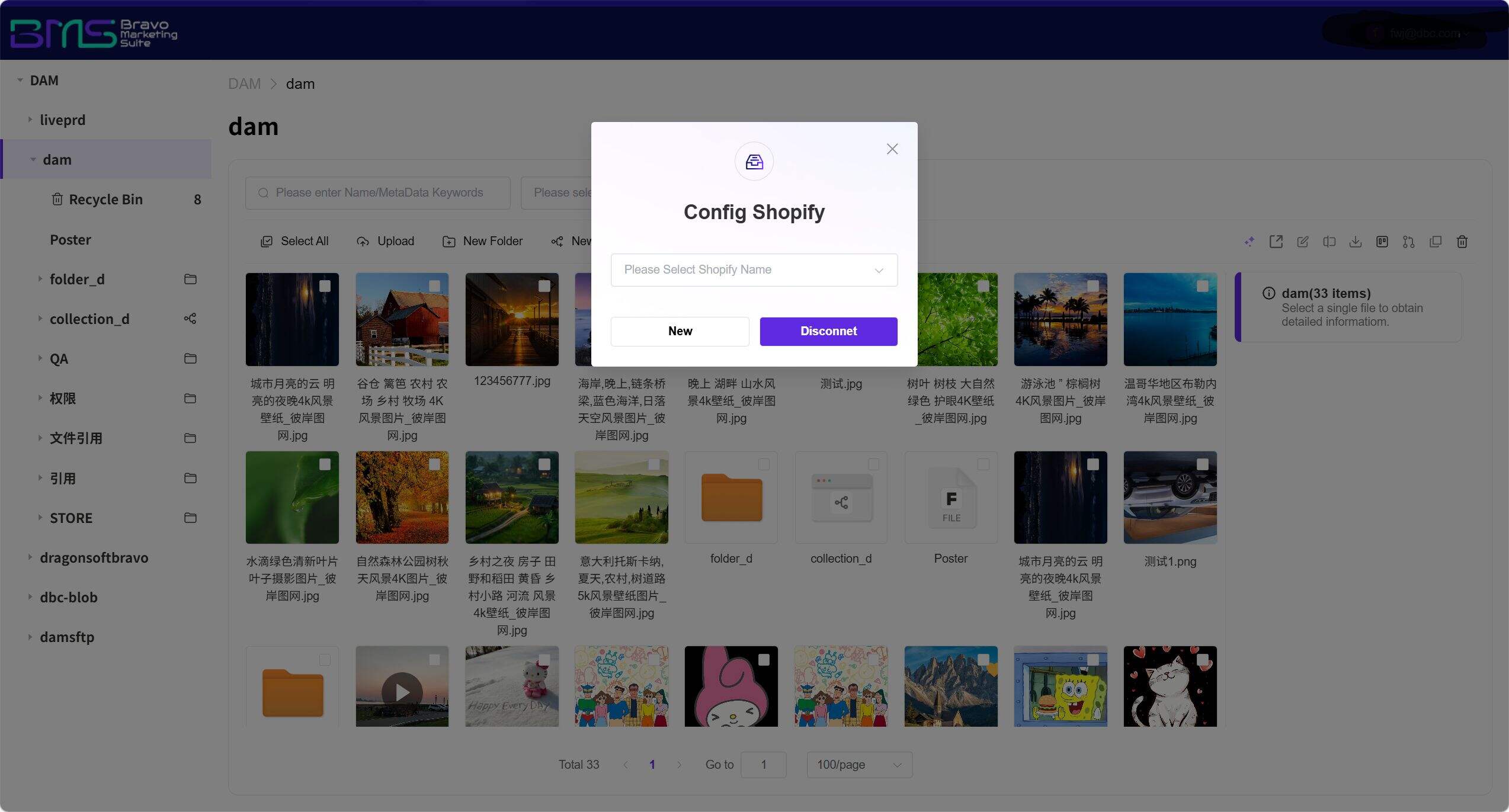
• Real-Time Cross-Cloud Asset Synchronization, Zero Latency on EC Displays
Leveraging DAM’s cross-cloud asset storage capability, bidirectional real-time synchronization between cloud-stored digital assets and EC platforms is achieved. Upon updating assets in DAM—such as product images, detail-page materials, and marketing assets—manual uploads to EC platforms are eliminated; the system automatically synchronizes updates to corresponding store backends, ensuring displayed assets on EC platforms remain consistent with DAM’s central repository. Reverse synchronization from EC platforms into DAM for archival is also supported, enabling "centralized management and omnichannel synchronization"—fully resolving issues like asset desynchronization and display latency, enhancing e-commerce operational efficiency, and guaranteeing consistency across multi-platform asset displays.
E-commerce assets exhibit frequent iteration characteristics: main product images require seasonal updates; marketing videos must align with promotional campaigns; instruction manuals need revision due to regulatory changes. Under traditional workflows, modifying DAM assets necessitates manual re-uploads to each EC platform, resulting in time lags and version fragmentation. DAM’s bidirectional real-time synchronization engine breaks this impasse:
• DAM→EC Automatic Push: After replacing a new main image in DAM, the system automatically detects the change and pushes it to associated Shopify/BigCommerce product pages, with CDN cache auto-refreshed, enabling global buyers to instantly view the latest version.
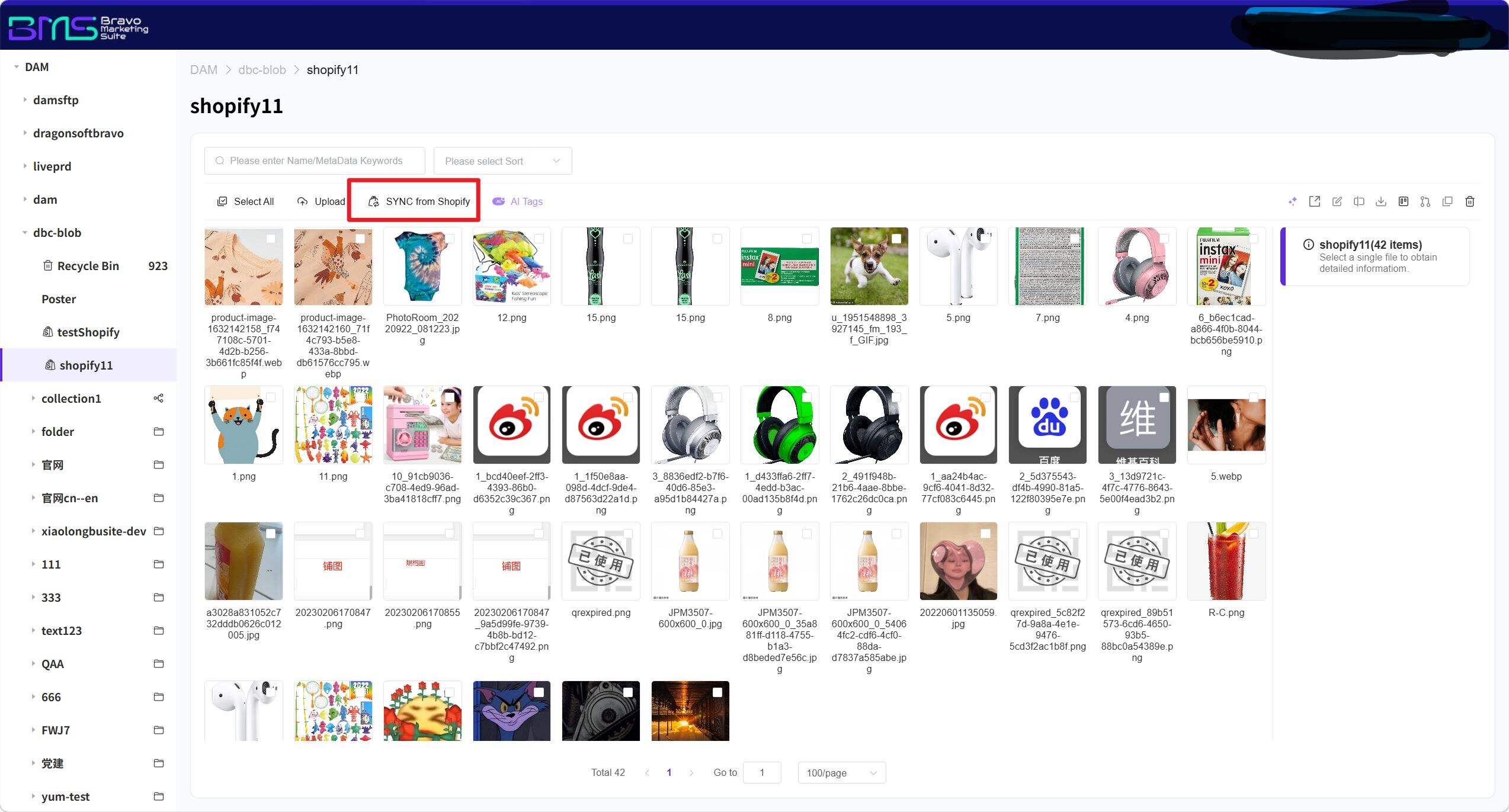
• One-Click Asset Distribution, Efficient Collaboration Across Multiple EC Stores
Supports one-click distribution of digital assets from DAM to multiple EC platforms and multiple stores, eliminating the need for individual integrations. Whether for e-commerce enterprises operating across multiple platforms or those managing multiple stores on a single platform, DAM enables unified control over asset distribution—significantly reducing repetitive workload for operations teams. Predefined distribution rules can be set to allocate assets precisely by store, region, or category, adapting to cross-border multi-regional operational scenarios and making multi-regional, multi-store asset management more efficient and accurate—empowering enterprise-scale operations.
Mature e-commerce enterprises often operate complex matrices spanning multiple brands, regions, and platforms: flagship brand Shopify Plus sites, sub-brand BigCommerce sites, and other third-party channels. As the central Asset Hub, DAM delivers unified cross-platform control and differentiated distribution:
• Hierarchical asset permissions: Design teams upload source files to DAM’s core repository; regional operations teams access only assets authorized for their specific region.
• Channel-specific watermarks: The same main image is automatically overlaid with distinct watermarks per channel (e.g., brand logo for Shopify stores, distributor identifiers for wholesale channels), preventing gray-market diversion and image theft
• Multi-Regional Compliance Adaptation, Empowering Cross-Border Operations
To meet the demands of cross-border e-commerce across multiple regions, DAM automatically adapts to region-specific compliance requirements during EC platform integration. For example, for overseas EC platforms’ privacy policies and data localization regulations, DAM optimizes asset storage and synchronization paths to ensure cross-regional EC asset flows comply with local laws. Simultaneously, multilingual asset synchronization is supported, facilitating unified management of assets across multilingual EC stores and breaking down regional operational barriers to accommodate global multi-regional e-commerce deployment needs.
Detailed Overview and Summary of DAM EC Platform Seamless Integration
In today’s landscape—where omnichannel deployment and cross-border operations are standard—EC platforms serve as the core conduit for enterprises to reach consumers and drive transactional conversion, while digital assets (product images, marketing materials, detail-page content, etc.) constitute the foundational support for EC platform operations. Currently, most e-commerce enterprises face critical pain points: "fragmented asset storage, numerous and heterogeneous EC platforms, cumbersome asset synchronization, and difficulty adapting to cross-regional operations". These challenges not only hinder operational efficiency but also constrain enterprises’ pace of omnichannel e-commerce expansion—assets must be manually uploaded to different EC platforms, risking version chaos and display delays; cross-cloud assets cannot interoperate with EC platforms, limiting traceability of asset value; and in cross-border operations, asset synchronization must comply with diverse regional regulatory requirements—making execution complex and inefficient.
Within BMS Digital Experience Platform, DAM (Digital Asset Management) module takes EC platform seamless integration as its core breakthrough, deeply leveraging cross-cloud asset storage capabilities to address key operational pain points faced by e-commerce enterprises. It delivers an asset-and-EC collaborative management solution characterized by "effortless integration, highly efficient synchronization, compliance-ready adaptation, and traceable asset value"—completely dismantling the linkage barriers between digital assets and EC platforms, empowering enterprises to advance omnichannel and cross-border e-commerce strategies efficiently.
The core value of DAM EC platform seamless integration lies in achieving deep synergy between asset management and e-commerce operations—fueling enterprises’ omnichannel e-commerce growth. Without requiring additional development, seamless integration with mainstream EC platforms—including Shopify and BigCommerce—is available, covering both domestic and cross-border e-commerce scenarios, enabling enterprises to rapidly connect multi-platform operational pipelines. Real-time bidirectional synchronization between cross-cloud assets and EC platforms eliminates version inconsistencies and display latency, ensuring asset uniformity across platforms and enhancing user experience. One-click asset distribution meets demands for multi-platform, multi-store, and multi-regional operations, significantly boosting collaboration efficiency to support enterprise-scale operations. Bidirectional data linkage enables enterprises to clearly track asset conversion value, optimize operational strategies, and maximize asset ROI.
To address core cross-border e-commerce requirements, DAM automatically adapts to varying regional compliance and linguistic needs—optimizing asset storage and synchronization pathways—breaking down geographical operational barriers and helping enterprises successfully expand into global e-commerce markets. Its zero-technical-barrier integration model lowers implementation costs: whether lightweight operations for SMEs or omnichannel deployment for large enterprises, rapid adaptation and efficient rollout are ensured—delivering comprehensive improvements in operational efficiency.
In summary, DAM EC platform seamless integration precisely resolves core pain points in asset-and-EC collaboration for e-commerce enterprises, establishing a complete closed loop encompassing "asset storage → distribution → synchronization → conversion", providing robust support for omnichannel and cross-border e-commerce operations. Through unified control, efficient collaboration, and compliance-ready adaptation, DAM helps enterprises reduce operational costs, improve conversion efficiency, and expand into global markets—becoming a core competitive advantage in digital e-commerce operations and enabling enterprises to seize market opportunities and drive business growth amid fierce e-commerce competition.
Frequently Asked Questions (FAQ) on DAM EC Platform Seamless Integration
• Q1: Which EC platforms does DAM currently support? Can it be extended to integrate enterprise-specific EC platforms?
A1: DAM currently offers deep integration with globally leading EC platforms including Shopify and BigCommerce. Additionally, standardized API interfaces are provided, enabling rapid customization for enterprise-specific EC platforms (e.g., proprietary e-commerce platforms or region-specific EC platforms) without extensive system modifications—supporting personalized operational needs and multi-platform deployment strategies.
• Q2: How long does it take for EC platforms to synchronize after assets are updated in DAM? Will this affect normal store operations?
A2: Real-time synchronization is supported. Following asset updates in DAM, EC platforms typically complete synchronization within 10 seconds—requiring zero manual intervention and causing no disruption to normal store operations. Synchronization progress is visualized, and if anomalies occur, the system triggers immediate alerts and provides remedial solutions.
• Q3: Does integrating DAM with Shopify and BigCommerce require technical development? Is configuration complex?
A3: No specialized IT expertise or development capability is required—ordinary operations personnel can independently complete setup. Configuration is code-free. DAM provides official pre-built connectors.
• Q4: In cross-border operations, how does DAM adapt to compliance requirements of EC platforms across different regions?
A4: The system includes built-in multi-regional compliance adaptation rules, automatically identifying the region of an EC platform and precisely applying local data localization, privacy protection, and other compliance mandates—ensuring legal and compliant cross-regional EC asset flows. Multilingual asset synchronization is also supported, automatically matching assets to the appropriate language based on regional requirements—facilitating smooth cross-border e-commerce operations and global market expansion.
• Q5: Can DAM manage assets across multiple Shopify stores (e.g., regional sites)? How is confusion avoided?
A5: Full support is provided. Assets from DAM can be distributed to multiple EC platforms and multiple stores—with unlimited store onboarding. DAM supports a multi-store architecture, allowing each Shopify site to be uniformly tagged at the asset level with "applicable region/channel." Operations personnel manage a global store matrix from a single interface while preserving localized independence for each site—enabling precise asset allocation and enhancing operational accuracy and efficiency.

Want to know more about our products?
With years serving Fortune 500 clients, we offer flexible solutions and integrated implementation.
