






Cross-Cloud Asset Storage and Management
Supports asset storage and management across multiple cloud platforms, including Alibaba Cloud, Tencent Cloud, AWS, and Azure, enabling enterprises to choose flexibly.
Core Advantages
Cross-Cloud Asset Storage and Management
Flexibly adapt to multi-cloud environments including Alibaba Cloud, Tencent Cloud, and AWS for boundaryless, efficient enterprise asset storage and management
As digital transformation deepens across enterprises, digital assets have become core production factors. Meanwhile, the widespread adoption of cloud storage has placed enterprises in the reality of "multi-cloud coexistence" — different business lines and regional teams may deploy on distinct cloud platforms, resulting in fragmented assets, siloed management, and heightened security and compliance risks. Traditional single-cloud storage models not only restrict enterprise choice but also introduce vendor lock-in, escalating costs, and insufficient business resilience. The DAM (Digital Asset Management) module within BMS Digital Experience Platform centers on cross-cloud asset storage and management, deeply integrating with mainstream public cloud platforms to deliver a digital asset storage and management solution characterized by "multi-cloud compatibility, unified control, security and compliance, and elastic efficiency" — comprehensively resolving asset management challenges in multi-cloud environments.
Core Advantages
I. Seamless Multi-Cloud Integration Architecture: Breaking Vendor Lock-In, Enabling Flexible Asset Storage Selection
Digital transformation often confronts enterprises with the challenge of "vendor lock-in" — historical assets are scattered across Alibaba Cloud OSS, Tencent Cloud COS, AWS S3, Azure Blob, and other platforms; migration incurs high costs and significant risk. Our DAM system adopts a cloud-native multi-cloud adaptation architecture, standardizing integration with object storage services across the four major public clouds via an API gateway. This enables "no movement of existing data, flexible handling of new data" hybrid management without migrating legacy data.Supporting mainstream public cloud platforms including Alibaba Cloud, Tencent Cloud, AWS, and Azure, enterprises can flexibly select storage providers based on business requirements, cost considerations, and geographic coverage — avoiding binding to any single cloud vendor and mitigating transformation costs and risks arising from technology stack lock-in. Whether managing legacy assets deployed on a specific cloud or implementing multi-cloud strategies for new business initiatives, DAM seamlessly integrates and unifies asset governance.
The system supports bucket-level integration, enabling enterprises to retain assets from different projects or regions on their original cloud platforms while managing retrieval, preview, distribution, and permission control through DAM’s unified interface.
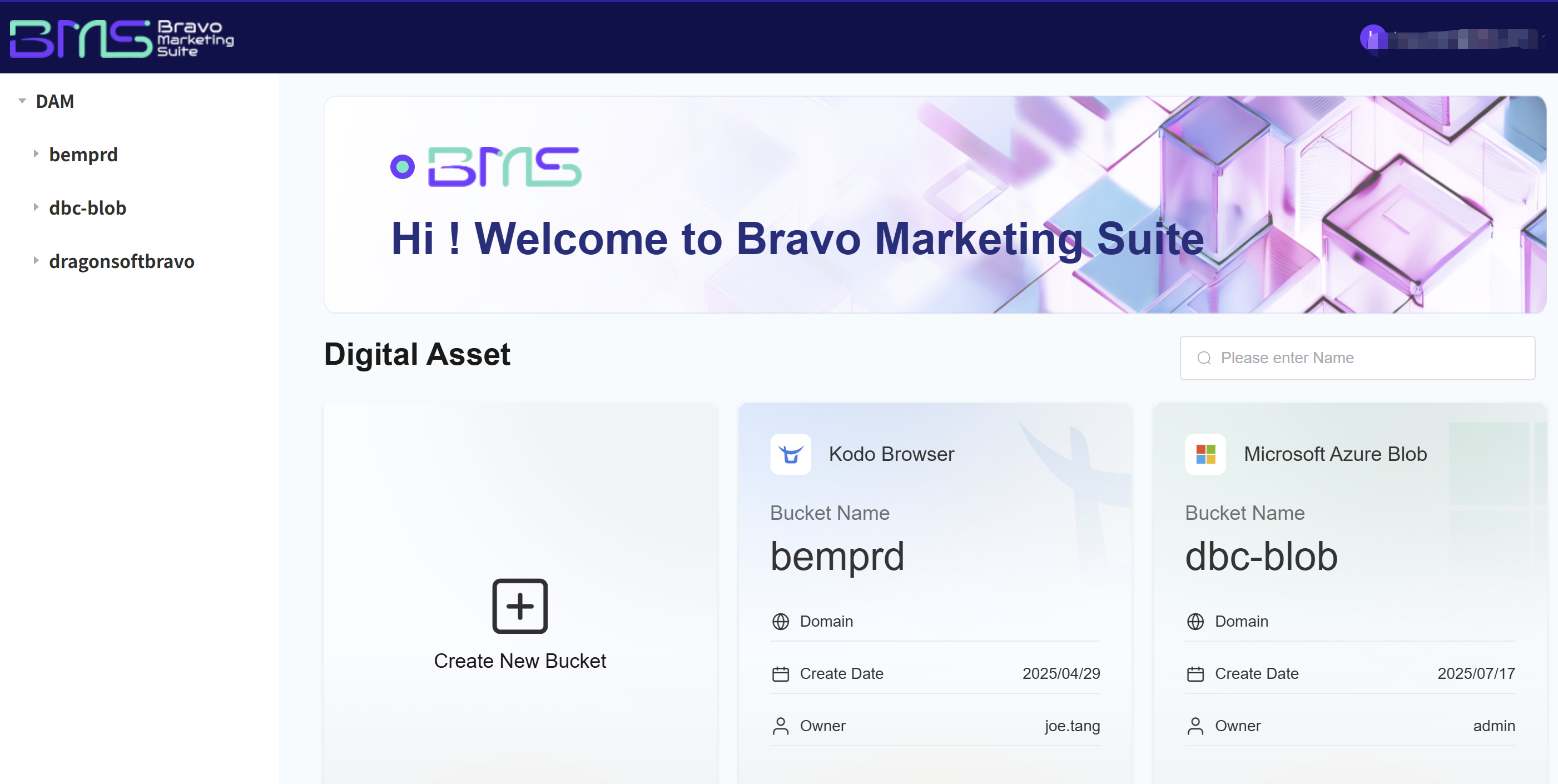
II. Unified Control Interface for Efficient Multi-Cloud Collaboration
Breaking down management barriers across disparate cloud platforms, administrators can perform full-lifecycle management — uploading, searching, editing, and distributing — of all cloud assets via a single DAM console, eliminating frequent switching between multiple cloud control panels. The system automatically synchronizes asset status, storage capacity, and access logs across cloud platforms, providing administrators with intuitive visibility into global asset distribution — significantly improving management efficiency in multi-cloud environments and reducing operational complexity and labor costs.
III. Cross-Cloud Security and Compliance: End-to-End Data Control
Built-in security and compliance frameworks tailored to various cloud platforms support core capabilities including data encryption (in-transit and at-rest), granular access control, and operation log auditing — meeting stringent security and compliance requirements across finance, government, healthcare, and other industries. Furthermore, asset storage locations can be flexibly configured per regional data sovereignty regulations, ensuring cross-cloud data flows comply with local jurisdictional governance standards and mitigating compliance risks.
IV. Elastic Scalable Architecture for Precise Cost Optimization
Leveraging cloud-native elasticity, enterprises dynamically scale storage resources according to business peaks (e.g., marketing campaigns or content release surges), avoiding idle resource waste. DAM supports intelligent tiered storage policies that automatically migrate infrequently accessed assets to lower-cost cloud storage tiers while retaining frequently accessed assets on high-performance tiers — preserving user experience while substantially reducing overall storage costs, achieving "pay-as-you-go, precise cost control".
V. Cross-Cloud Disaster Recovery and Redundancy: High Asset Availability
Supporting cross-cloud disaster recovery and redundancy storage strategies, enterprises can synchronize critical assets across multiple cloud platforms, preventing asset loss or service interruption due to failure of any single cloud. When an anomaly occurs on one cloud platform, the system automatically fails over to a standby cloud node, ensuring continuous asset accessibility and business stability — establishing a robust high-availability defense for enterprise digital assets.
VI. Seamless Migration Capability for Smooth Business Transition
Providing a visual cross-cloud asset migration tool supporting batch migration, incremental synchronization, and resumable transfers, enterprises can seamlessly migrate legacy assets from existing cloud platforms to target clouds without manual intervention or business interruption. During migration, asset metadata, version history, and permission configurations are automatically preserved — guaranteeing asset integrity and business continuity, facilitating smooth transitions to multi-cloud architectures.
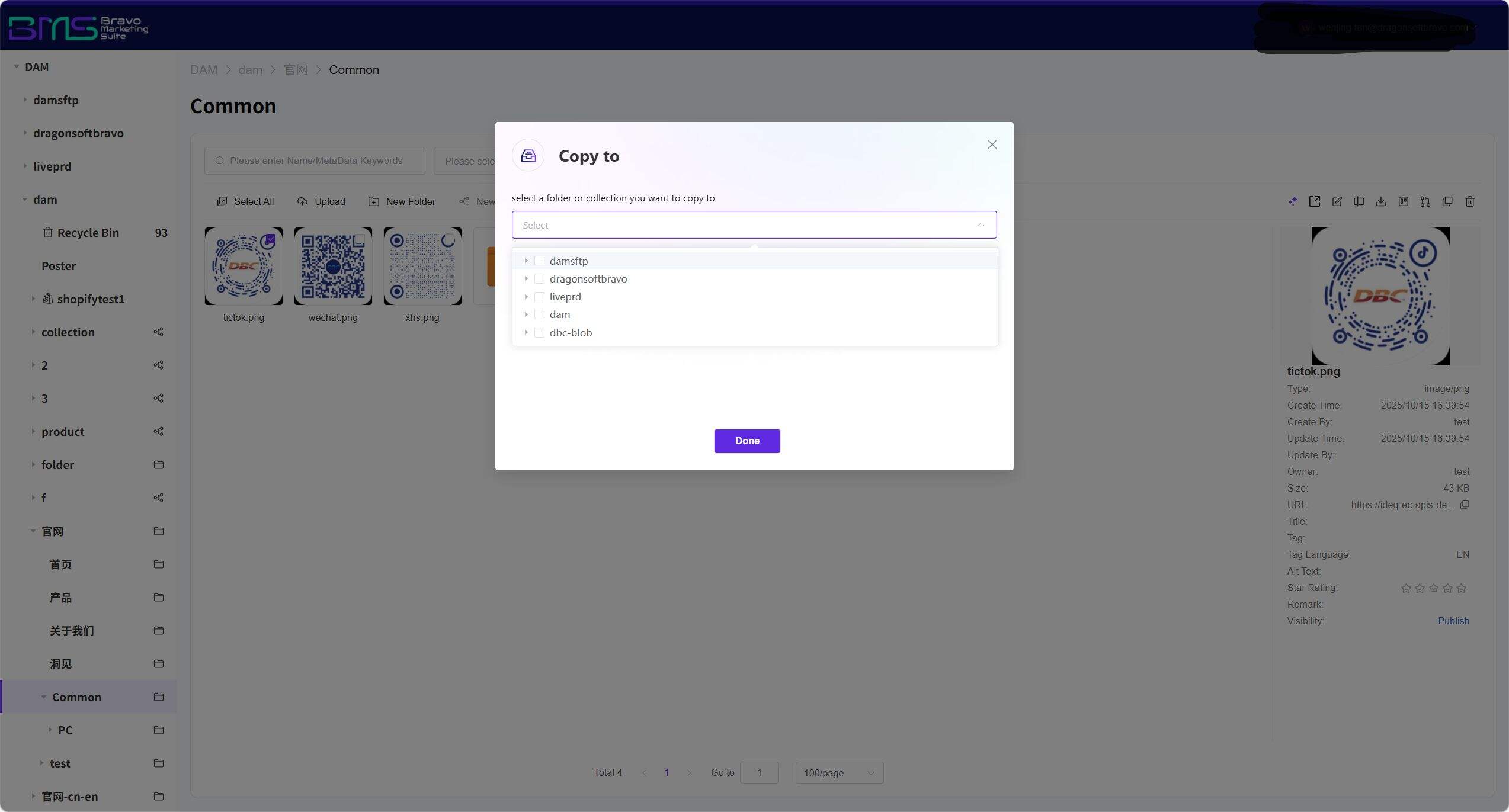
Detailed Description and Summary
The core value of DAM’s cross-cloud asset storage and management lies in shifting enterprises from "passively adapting to cloud platforms" to "proactively selecting cloud services". Through deep compatibility with leading cloud vendors, enterprises gain flexibility to choose storage providers based on business needs, cost structures, and geographic coverage — avoiding binding to any single cloud vendor and eliminating transformation costs and risks associated with technology stack lock-in. Simultaneously, the unified control interface dismantles management barriers across disparate cloud platforms, enabling administrators to perform full-lifecycle operations on all cloud assets via a single console — dramatically improving management efficiency and reducing cross-platform operational complexity.
From a security and compliance perspective, DAM embeds cloud-platform-specific security frameworks supporting data encryption, permission control, and log auditing — satisfying stringent regulatory requirements across industries. Its elastic scalable architecture allows enterprises to dynamically adjust storage resources per business peaks, combined with intelligent tiered storage strategies for precise cost optimization. Cross-cloud disaster recovery and seamless migration capabilities further ensure business continuity and asset high availability in multi-cloud deployments — solidifying the foundation for digital transformation.
In summary, DAM’s cross-cloud asset storage and management capability not only resolves enterprise pain points in multi-cloud asset management but also empowers enterprises with proactive authority to flexibly orchestrate cloud services — enabling digital assets to flow freely and be reused efficiently across multi-cloud ecosystems, becoming a core enabler of enterprise digital transformation.
In-Depth Analysis: How Cross-Cloud Asset Storage and Management Restructures Enterprise Cloud Strategy
In today’s multi-cloud era, 85% of enterprises have adopted hybrid or multi-cloud architectures (Flexera 2024 State of the Cloud Report), yet a vast gap remains between "using multi-cloud" and "effectively managing multi-cloud". Under traditional models, enterprises must repeatedly switch between disparate cloud consoles, causing asset fragmentation, difficult retrieval, hidden cost traps, and unmanageable compliance risks.
Our DAM cross-cloud asset storage and management module is not merely a simple "multi-cloud browser"; rather, it achieves truly cloud-agnostic management via an abstraction layer architecture:
At the technical architecture level, the system employs a multi-cloud adapter design pattern, encapsulating API differences among Alibaba Cloud OSS, Tencent Cloud COS, AWS S3, and Azure Blob into standardized interfaces.
Frequently Asked Questions (FAQ)
Q1: Does DAM cross-cloud management require migrating existing cloud storage data to a centralized platform?
A1: No migration required. DAM adopts a federated architecture, connecting to existing cloud storage buckets via APIs while leaving asset physical locations unchanged. Enterprises retain legacy data on Alibaba Cloud, Tencent Cloud, AWS, and Azure, managing retrieval and governance through DAM’s unified interface. For cost or performance optimization, gradual migration can be performed later using lifecycle policies — avoiding forced, one-time migrations and ensuring zero business interruption.
Q2: In cross-cloud scenarios, will asset access speed degrade? How is user experience ensured?
A2: DAM incorporates intelligent CDN scheduling and edge caching. Upon receiving an asset request, the system first evaluates the user’s geographic location and network environment, prioritizing delivery from the nearest cloud platform or CDN node; simultaneously, hot assets are automatically cached at edge nodes, achieving over 95% cache hit rate for subsequent requests.
Q3: Which specific cloud platforms does DAM support? Can additional cloud services be customized and added?
A3: DAM currently provides deep integration with mainstream public cloud platforms including Alibaba Cloud, Tencent Cloud, AWS, and Azure. It also offers open APIs for rapid integration of other cloud services per enterprise requirements — enabling comprehensive coverage across the multi-cloud ecosystem.
Q4: How is asset security ensured across different cloud platforms? Does DAM meet industry compliance requirements?
A4: DAM embeds security capabilities including in-transit encryption, at-rest encryption, granular permission control, and operation log auditing. It also adapts to industry-specific compliance frameworks (e.g., China’s MLPS 2.0, GDPR) and supports flexible configuration of storage locations per regional data sovereignty laws — ensuring cross-cloud data security and compliance.
Q5: Will business operations be interrupted during asset migration across clouds? Can assets be lost during migration?
A5: No. DAM provides a visual migration tool supporting batch migration, incremental synchronization, and resumable transfers. During migration, asset metadata, version history, and permission configurations are automatically retained. Migration can be scheduled during off-peak hours to ensure business continuity and asset integrity.
Q6: Does DAM cross-cloud management support private cloud or hybrid cloud deployment?
A6: Fully supported. DAM seamlessly integrates on-premises data centers with public cloud platforms, supporting hybrid cloud architecture: mission-critical sensitive assets reside in on-premises private clouds; marketing assets leverage public cloud CDN acceleration; archival data utilizes low-cost public cloud cold storage — all managed through DAM’s unified interface to achieve optimal balance between security and cost.

Want to know more about our products?
With years serving Fortune 500 clients, we offer flexible solutions and integrated implementation.
