






What You See Is What You Get Interface
Build a visual and standardized configuration process
Core Advantages




Product Deep Dive: How Our BMS Digital Experience Platform Achieves Genuine "Visualization and Standardization"?
Industry Pain Points and Current Status: In the operational logic of traditional CMS, content publishing often faces the dilemma of "blind filling": The backend consists of isolated input fields, while the frontend appearance is entirely left to guesswork and repeated saving. For complex interactions or multi-end adaptation, technical team intervention and code-level fine-tuning are frequently required. This fragmented workflow not only causes marketing creativity to miss opportunities amid repeated verification, but also risks compromising global brand standards due to inadvertent operational errors.
Our BMS DXP Implementation Solution: We believe the best tools should render technology invisible to users. Therefore, our BMS DXP deeply integrates "visual interface"with "standardized workflows".
Through the technical approach of "component parameter formularization", we transform every button color, image corner radius, and paragraph animation into clear, standardized input fields. Operations personnel shift their daily work from "researching how to implement" to "deciding how to express". More critically, the system establishes a clear boundary between operational flexibility and architectural rigor: the page foundation is automatically safeguarded by the system, allowing operations personnel to focus exclusively on content population.
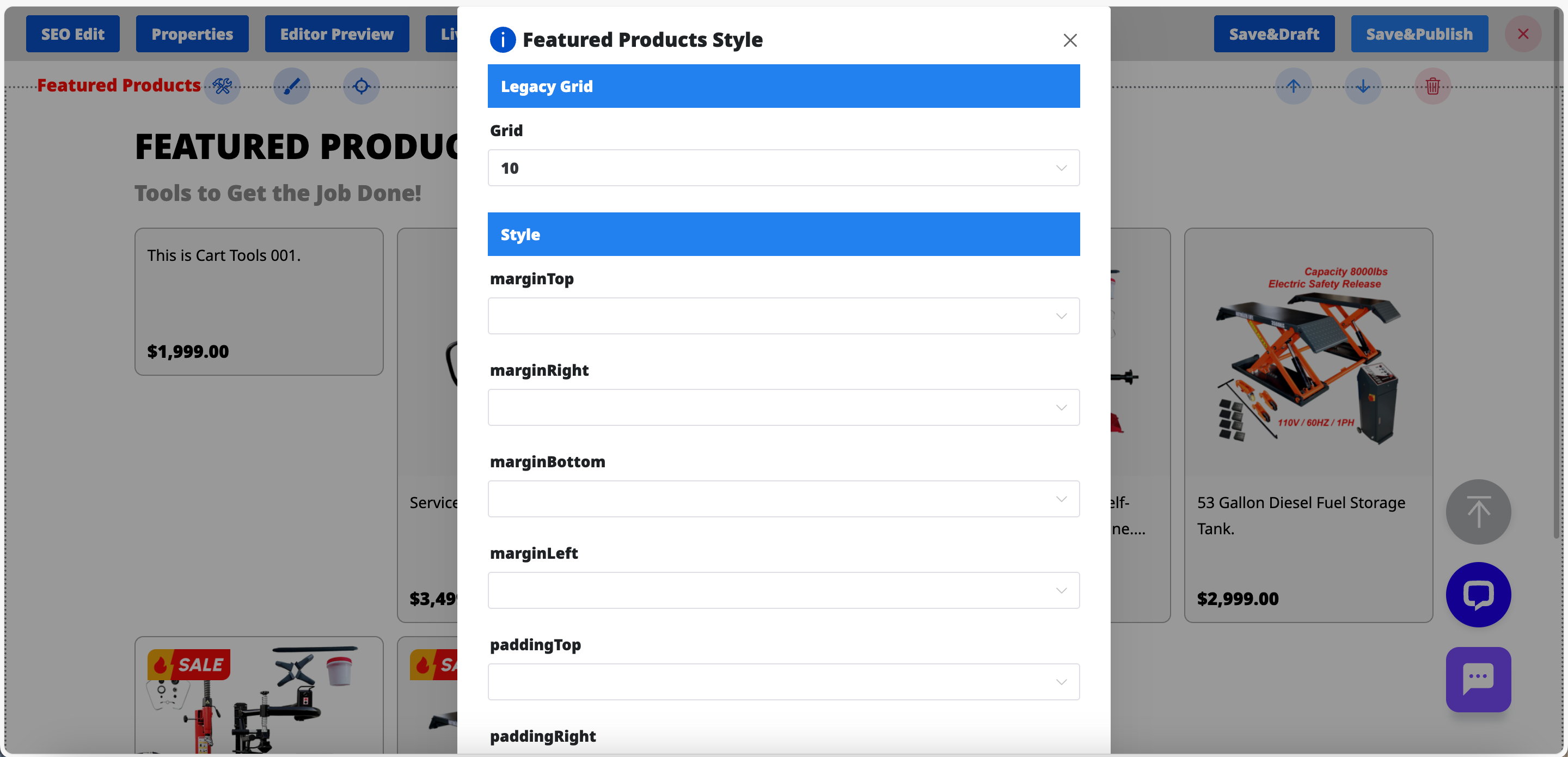
This architecture not only enhances single-page production efficiency but also achieves highly standardized data output at a deeper logical level. Standardized field inputs ensure that exported data inherently possesses clear semantic structure. Regardless of technological evolution, your content assets remain clean, healthy, and easily distributable. This represents not merely an efficiency leap in operations, but a qualitative transformation in enterprise digital asset management granularity.
Frequently Asked Questions (FAQ)
Q1: Does this "form-based" configuration restrict design freedom?
A1: Quite the contrary. We encapsulate rich design variants into highly flexible option combinations. Through different field permutations and combinations, you can derive hundreds of visual forms. Meanwhile, we retain a "advanced configuration" entry point for professional users, balancing usability with deep customization.
Q2: Can high-quality interactive effects be achieved without a technical background?
A2: Absolutely. Component effects and parameters have already been abstracted into simple property menus. You only need to fill in or select desired effects; the system will automatically generate underlying rendering logic, making interactive design effortless.
Q3: Do standardized fields benefit SEO or data scraping?
A3: Significantly. Because fields are structured, the system can automatically convert entered content into perfect Schema markup. Compared to unstructured text editing, this generated HTML carries clearer semantics, making it more readily identifiable and indexable by search engines and AI engines (e.g., GEO).

Want to know more about our products?
With years serving Fortune 500 clients, we offer flexible solutions and integrated implementation.
