






Multi-component, Multi-template Design
Build an Intelligent CMS Digital Foundation
Core Advantages


Product Deep Dive: How Our BMS Digital Experience Platform Builds the Digital Foundation
In the process of enterprise digital transformation, it is often difficult to achieve both efficiency and standardization in content production. Traditional CMS platforms typically face two extremes: either static templates with limited functionality that cannot support complex business logic, or highly customized development approaches that result in lengthy time-to-market and high maintenance costs.
Our BMS DXP breaks this impasse through the " component atomicity " principle. We decouple complex code logic into independent functional modules, enabling operations personnel to configure pages intuitively via standardized forms—eliminating the need to build pages from scratch. Whether for product showcases, online forms, or intricate interactive workflows, all can be realized through flexible component composition.
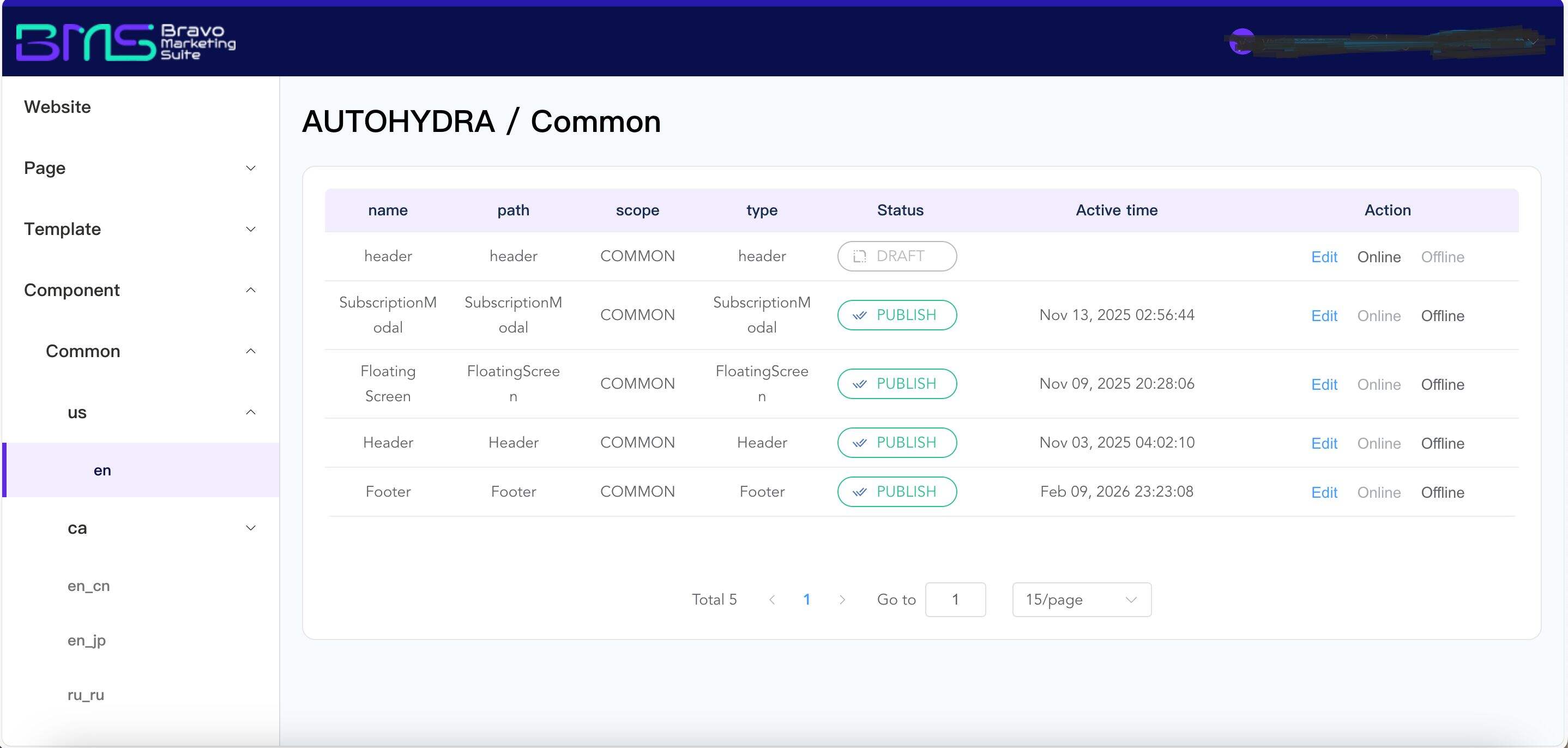
At a deeper level, this componentized architecture ensures highly structured underlying data. Unlike redundant code generated by other market solutions, our system automatically performs semantic alignment during page generation, providing clear path mapping for search engines and AI engines. This " out-of-the-box " flexibility empowers non-technical teams to independently drive rapid global content updates—while preserving brand consistency.
Frequently Asked Questions (FAQ)
Q1: Is this CMS suitable only for simple showcase websites?
A1: Absolutely not. Leveraging rich interactive components and standardized APIs, you can build complex business environments—including e-commerce platforms, service portals, and enterprise knowledge bases.
Q2: If our business expands from domestic to international markets, do we need to rebuild existing assets?
A2: No rebuilding required. The system supports lossless export and import of components and templates, and—combined with its built-in internationalization framework—enables rapid mirroring and cloning of multilingual sites.
Q3: Is the learning curve steep for non-technical staff configuring components independently?
A3: Very low. The editor employs a " WYSIWYG " interaction model; all properties are controlled via form elements such as toggles, sliders, and dropdown menus—enabling average users to become proficient within 10 minutes.
Q4: How do pre-built templates prevent visual similarity with competitors’ websites?
A4: Templates serve only as skeletons. By customizing colors, fonts, and flexibly combining diverse functional components, visual differentiation exceeds 80%, ensuring distinctive brand identity.

Want to know more about our products?
With years serving Fortune 500 clients, we offer flexible solutions and integrated implementation.
