






AI-Native Deep Integration
Comprehensively empowering a new intelligent content operations ecosystem
Core Advantages


Product Deep Dive: Evolving from 'Manual Proofreading' to 'Semantically Driven' Automated Workflows
The Efficiency Ceiling of Traditional Models: 'In most content management scenarios, AI is often treated as an external plug-in ' or a temporary dialog box. Operations personnel are forced to constantly switch between platforms: polishing copy in ChatGPT, translating via DeepL, compressing or cutting images on external sites, and finally pasting fragmented outputs back into the CMS. This disjointed workflow not only causes semantic consistency to be lost during information transfer but also traps operations personnel in the mechanical labor of 'mover' (manual cargo handlers).
Our BMS DXP Intelligent Hub Solution: Building a Deeply Integrated "Copilot" Experience Guided by globally leading content management philosophies, we modularize AI capabilities and deeply embed them into every operational interaction path of the operations team. The system is no longer merely a storage bucket but an intelligent co-pilot with semantic perception capabilities—reshaping the entire content lifecycle across three critical dimensions:
1. AI-Powered Collaborative Creation: Zero-Barrier Reconstruction of Professional SEO Content to Drive Cross-Channel Traffic Growth
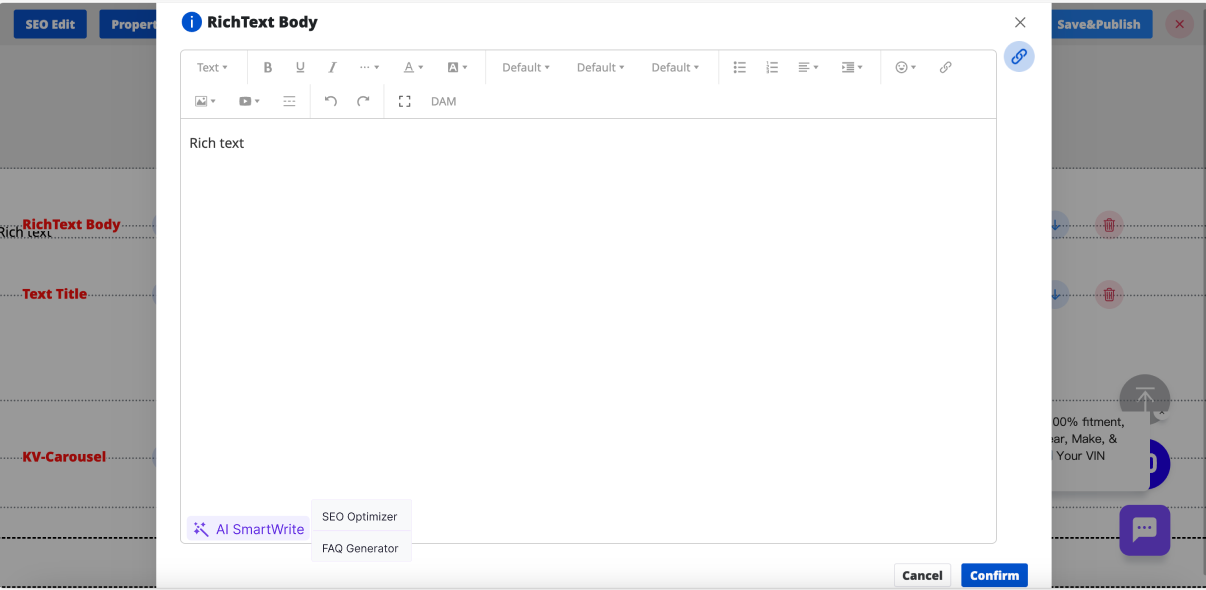
The built-in AI Writing Assistant serves as a seasoned content editor for operations personnel. It transforms the traditional "write-and-publish" approach " into a closed-loop "write-and-optimize" process ", achieving perfect parity between operational friendliness and technical alignment:
Comprehensive SEO/GEO Content Optimization: After operations personnel draft an article, the AI Writing Assistant performs real-time refinement based on the article's content and predefined brand tone. Moreover, it conducts dual-layer reconstruction of both content and structure according to the latest SEO/GEO logic, precisely identifies and optimizes keyword density, suggests semantically related vocabulary, and automatically standardizes H-tag hierarchy. This deep correction " ensures that even non-technical operations personnel can produce articles perfectly aligned with the latest search algorithm preferences.
Semantic-Driven One-Click FAQ Generation: The embedded AI tool possesses powerful semantic extraction capabilities. It automatically identifies core knowledge points and potential user pain points within an article and generates a logically rigorous FAQ list with one click. This not only significantly enriches page content depth but—since FAQs naturally align with search engines' "rich snippet⸣ display logic—also markedly improves site authority placement and click-through rates on search result pages.
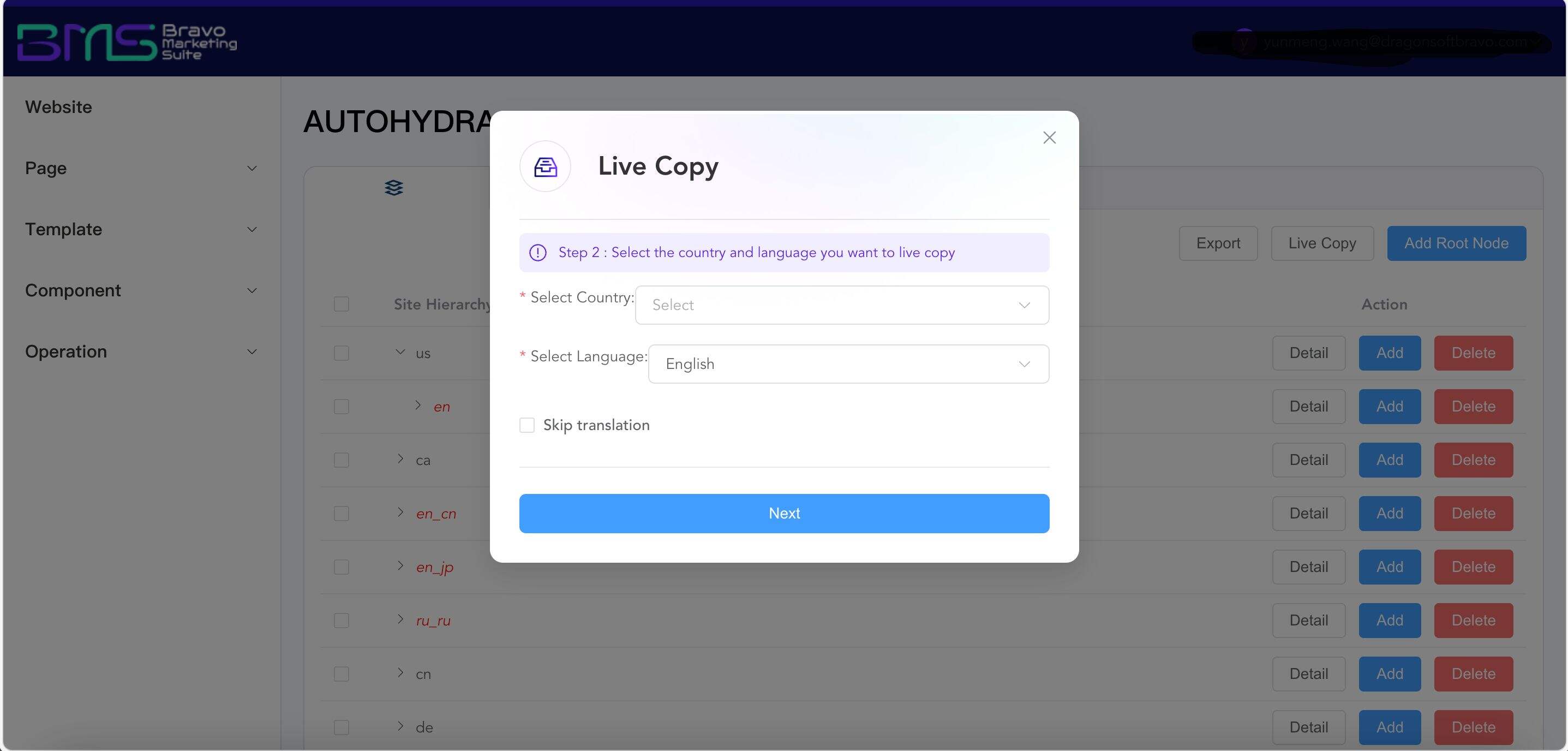
2. AI-Powered One-Click Translation: Achieving the Ultimate Efficiency of 'Managing Global Markets Solo'
The system features a high-performance AI Translation API, breaking down barriers to multi-site, cross-language operations.
Context-Aware Automatic Translation: When managing multilingual sites, operations personnel use LiveCopy to instantly convert source-site content into target languages. The built-in AI translation goes beyond simple mechanical translation, performing deep localization tailored to the target language—dramatically reducing manual proofreading costs and enabling second-level launch of multilingual sites.
3. AI-Generated Schema: Injecting 'Machine-Readable' Digital DNA
To simultaneously unlock traffic from both traditional search (SEO) and generative search (GEO), the system implements AI-generated Schema as a core underlying capability.
Automatic Structured Data Annotation: AI-Schema deeply analyzes page attributes, component content, and textual meaning to automatically construct and inject standardized (JSON-LD) Schema structured data—eliminating the need for manual injection and verification by operations personnel.
Dual Empowerment for SEO & GEO: This technology not only helps search engines accurately extract and display rich media snippets on result pages—significantly enhancing user click intent—but also functions as a "machine-specific instruction manual⸣ for AI engines, ensuring core brand information is precisely recognized and directly cited as an "authoritative source⸣ within generative engines—securing the coveted "zero-position" visibility in future search.
Frequently Asked Questions (FAQ)
Q1: Many AI plugins exist on the market; what is the fundamental distinction of our native, deeply integrated AI solution?
A1: Traditional CMS AI is typically "external plug-in-style⸣, requiring users to repeatedly copy and paste across different windows. In contrast, our AI is natively integrated at the foundational layer of the CMS workflow—not merely a dialogue box, but contextually aware. When you upload images, write articles, or publish multilingual sites, AI seamlessly creates and optimizes content based on website context and brand tone. This deep integration eliminates operational fragmentation, enabling a leap from "manual cargo handling⸣ to "semantically driven automation⸣.
Q2: What tangible growth benefits does embedding an AI core engine bring to enterprise content management?
A2: Benefits manifest primarily across two dimensions: efficiency and content quality:
Team Efficiency Gains: AI automates over 90% of repetitive tasks (e.g., manual translation, tagging, article writing, Schema injection). This "operations-friendly empowerment⸣ fully liberates operations teams from tedious manual chores, allowing them to focus energy on high-value strategic planning and creative content development.
Content Quality Improvement: The AI embedded in the website is not a single-purpose tool but fully integrated across the entire content production chain—from semantic structural optimization of initial drafts and precise contextual translation across languages, to automated visual asset tagging and precise底层 Schema injection. This full-stack empowerment ensures every piece of content maintains premium brand quality while inherently aligning with SEO display logic and GEO crawling preferences.
Q3: How does AI-generated Schema structured data simultaneously empower SEO and GEO?
A3: This is a "two-birds-with-one-stone⸣ digital asset enhancement technique, enabling a leap from "webpage display⸣ to "semantic understanding⸣:
For Traditional SEO:It enables search result pages to transcend plain text—automatically displaying rich media snippets such as star ratings, price ranges, and FAQ cards—significantly enhancing visual impact and thereby directly boosting user click-through rates.
For Future GEO: It effectively provides generative engines like ChatGPT and Google SGE with a "standard machine instruction manual⸣. By eliminating semantic ambiguity, it ensures core brand assets (e.g., product specifications, expert opinions) are precisely recognized by AI engines and directly cited as "authoritative reference answers⸣—locking in traffic entry points for the era of intelligent search.

Want to know more about our products?
With years serving Fortune 500 clients, we offer flexible solutions and integrated implementation.
