






Cross-Cloud Asset Storage
BMS-DAM is compatible with Alibaba Cloud, Tencent Cloud, AWS, and Azure — the four leading cloud platforms — providing a unified management interface to free enterprises from vendor lock-in and enabling flexible control over asset storage and flow in multi-cloud environments.
Core Advantages
Cross-Cloud Asset Storage: Unified Across Clouds, Vendor Lock-in Free
During enterprise digital transformation, assets are often scattered across cloud platforms adopted at different times and by different business units—Alibaba Cloud OSS, Tencent Cloud COS, AWS S3, and Azure Blob. Vendor lock-in, high costs, and insufficient business resilience resulting from single-cloud storage models have become widespread pain points in large-scale enterprise asset management. BMS-DAM delivers a unified, flexible, and secure cross-cloud storage solution built on a multi-cloud adaptable architecture.
I. Unified Multi-Cloud Management
BMS-DAM connects to object storage services of the four major mainstream cloud platforms via a standardized API gateway, bringing assets dispersed across Alibaba Cloud, Tencent Cloud, AWS, and Azure under a single management interface. Administrators can perform asset search, preview, editing, and distribution directly from one console—eliminating the need to repeatedly switch between the back-end interfaces of different cloud platforms. The system synchronizes storage status and access logs from each cloud platform in real time, providing full visibility into global asset distribution. Enterprises can flexibly select storage providers based on business requirements, cost structure, and geographic coverage—without being locked into any specific technology stack or constrained in operational choice.
II. No Migration of Existing Assets Required
Traditional multi-cloud management solutions typically require consolidating historical data onto a designated platform—a process fraught with high risk, long timelines, and potential business interruption. BMS-DAM adopts a federated architecture that directly integrates with existing cloud storage buckets via APIs. Physical locations of legacy assets remain unchanged; new assets are allocated flexibly according to defined policies. Enterprises avoid the cost and risk of forced, one-time migration while still enjoying all operational conveniences of a unified management interface. If storage distribution optimization is needed, it can be achieved gradually through lifecycle policies—not mandatory migration.
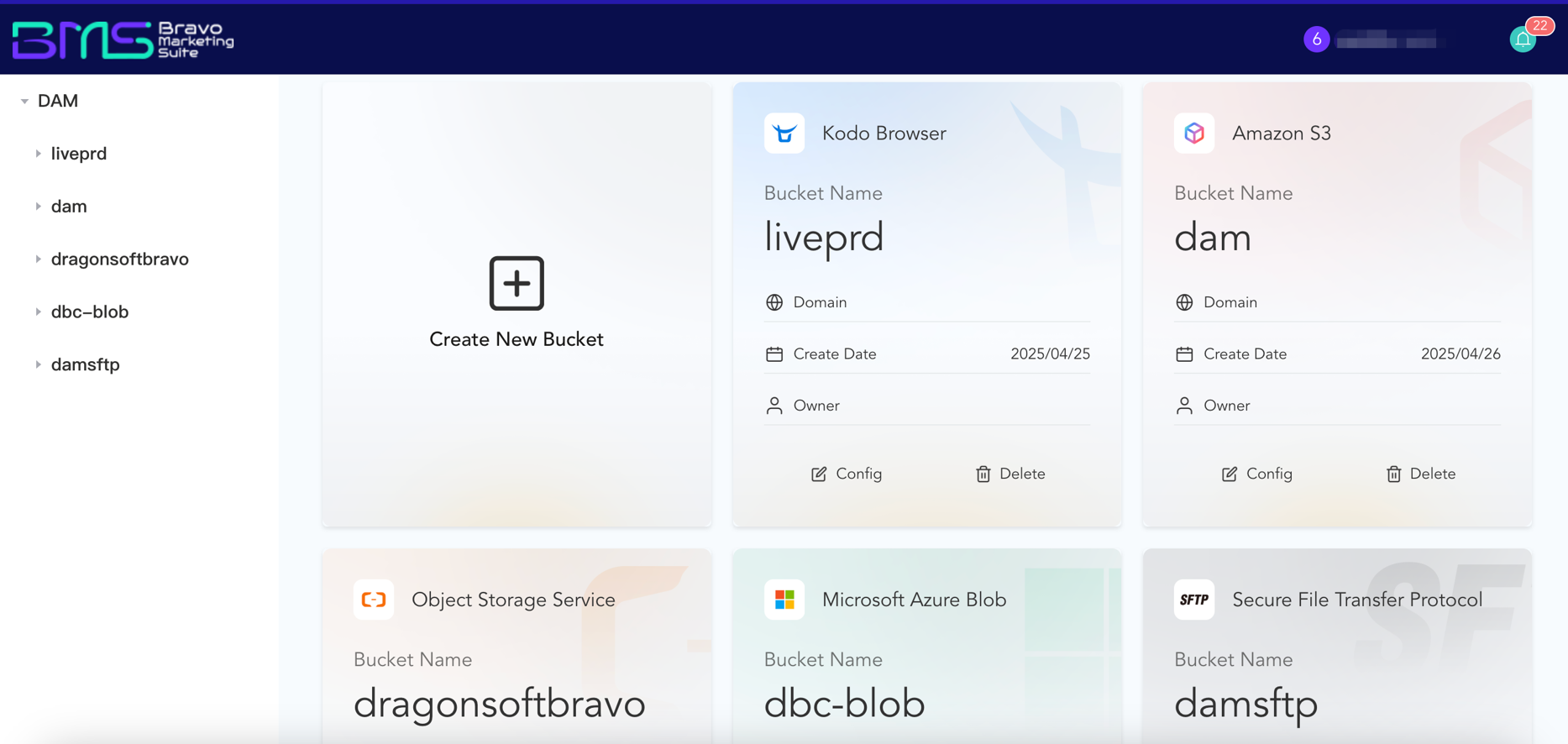
(Image: Multi-cloud storage interface)
III. Intelligent Tiered Storage
Asset access frequency varies significantly—product hero images currently in promotion may be called hundreds of times daily, whereas exhibition materials from three years ago may not be opened even once per year. BMS-DAM supports intelligent tiered storage policies: the system automatically classifies assets by access frequency, retaining hot data on high-performance storage layers to ensure fast access, and automatically moving cold data to low-cost storage layers to reduce holding costs. Tiering rules can be customized by administrators or optimized automatically by the system based on observed access patterns. This approach ensures optimal user experience while substantially lowering long-term storage costs for massive volumes of assets.
IV. Cross-Cloud Disaster Recovery and Seamless Migration
For mission-critical assets, BMS-DAM supports cross-cloud disaster recovery—storing identical copies of the same asset across multiple cloud platforms. Should one cloud platform fail, the system automatically switches to a standby node, ensuring uninterrupted asset access and stable business operations. Cross-cloud asset migration is also performed via visual tools: supporting batch migration, incremental synchronization, and resumable transfers. Metadata, version history, and permission configurations are automatically preserved throughout the migration process. Whether replacing cloud vendors, upgrading infrastructure, or integrating business systems, asset migration proceeds smoothly—with zero risk of service interruption.
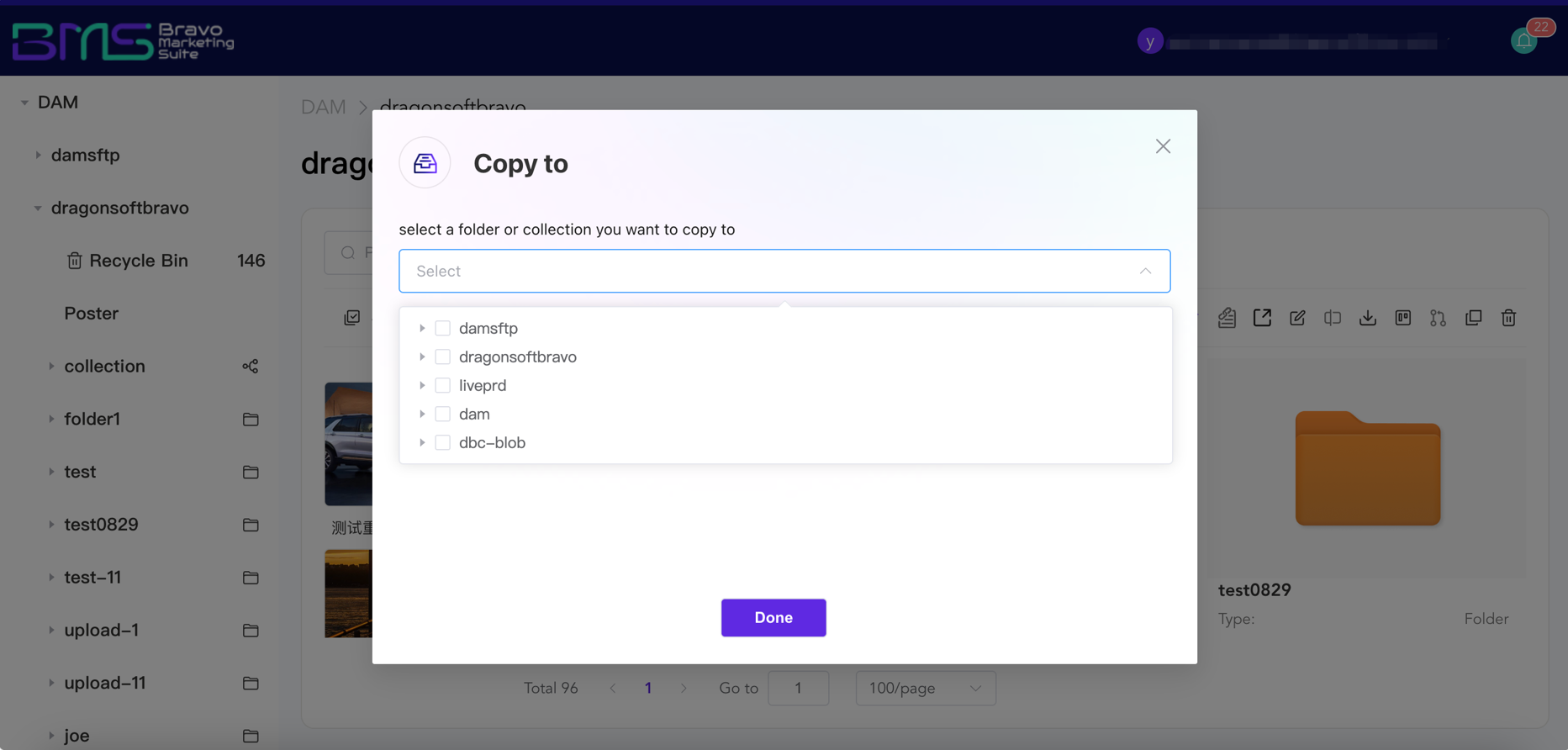
(Image: Cross-cloud migration interface)
Summary
Multi-cloud should not be a management burden. The core value of BMS-DAM’s cross-cloud storage capability lies in shifting enterprises from “passively adapting to cloud platforms” to “actively selecting cloud services”—where asset storage location is determined by business needs, not technical constraints. From unified governance to intelligent tiering, and from cross-cloud disaster recovery to seamless migration, BMS-DAM enables digital assets to flow securely, efficiently, and cost-effectively within the multi-cloud ecosystem.
Frequently Asked Questions (FAQ)
- Q1: Does DAM cross-cloud management require migrating existing cloud storage data to a centralized platform?
A: No migration required. DAM connects to existing cloud storage buckets via APIs, leaving asset physical locations unchanged. Enterprises retain legacy data across their respective cloud platforms and manage it uniformly through the DAM interface. If storage distribution optimization is desired, it can be implemented gradually using lifecycle policies—ensuring zero business interruption.
- Q2: Will asset access speed be impacted in cross-cloud scenarios?
A: DAM features an embedded intelligent CDN routing mechanism and edge caching. When users request assets, the system prioritizes delivery from the nearest cloud platform or CDN node; hot data is automatically cached at edge nodes—guaranteeing consistent cross-regional access experience.
- Q3: How is asset security ensured across different cloud platforms?
A: DAM provides built-in transmission encryption, storage encryption, and granular permission controls, with full audit trails for all operations. It also complies with regulatory frameworks such as China’s Classified Protection System (MLPS) and GDPR, and supports flexible geographic storage configuration per data sovereignty regulations—ensuring cross-cloud data security and compliance.
- Q4: Will cross-cloud migration interrupt business operations or cause data loss?
A: No. The migration tool supports batch migration, incremental synchronization, and resumable transfers, automatically preserving metadata, version history, and permission configurations. We recommend executing migrations during off-peak hours. The system performs pre- and post-migration data validation and confirms integrity before final cutover.Q5: Does DAM cross-cloud management support private cloud or hybrid cloud deployment? A: Yes. DAM integrates seamlessly with both on-premises data centers and public cloud platforms, enabling flexible hybrid cloud deployments—for example, storing core assets in private clouds, marketing assets on public cloud CDNs, and archival data in low-cost cold storage—while managing all through a single DAM interface.

Want to know more about our products?
With years serving Fortune 500 clients, we offer flexible solutions and integrated implementation.
