






Agent-Powered Intelligence
BMS-DAM integrates the BMS-Agent intelligent engine (Maestro), enabling direct operation of DAM capabilities via natural language instructions — upgrading asset management from "manual-triggered" to "intelligently driven".
Core Advantages



Agent-Powered Intelligence: Activate DAM Capabilities with Natural Language
In daily use of the BMS-DAM (Digital Asset Management platform), many operations require cross-module, multi-step execution—from precise asset retrieval and editing, to replacing assets on store pages and archiving outdated versions. These workflows often force users to manually chain together lengthy operational paths. BMS-DAM significantly shortens this path via its built-in intelligent Agent: users simply express their intent in natural language, and the Agent automatically interprets semantic meaning and orchestrates DAM capabilities alongside other modules within the BMS DXP ecosystem—completing the entire process from retrieval to execution in a single sentence.
I. Natural Language–Driven Operations
Users need not familiarize themselves with DAM’s functional hierarchy or menu structure. To perform specific operations on a batch of assets, they can directly speak or type a natural language instruction—the Agent automatically parses business semantics, decomposes them into concrete DAM operation steps, and executes them. For example, entering “Add the brand watermark uniformly to all white T-shirt product images uploaded yesterday” triggers the Agent to sequentially perform asset search, time-based and content-based filtering, and batch watermarking—requiring no manual button clicks. Execution progress is visualized in real time, allowing users to confirm status or proactively interrupt tasks at any point.
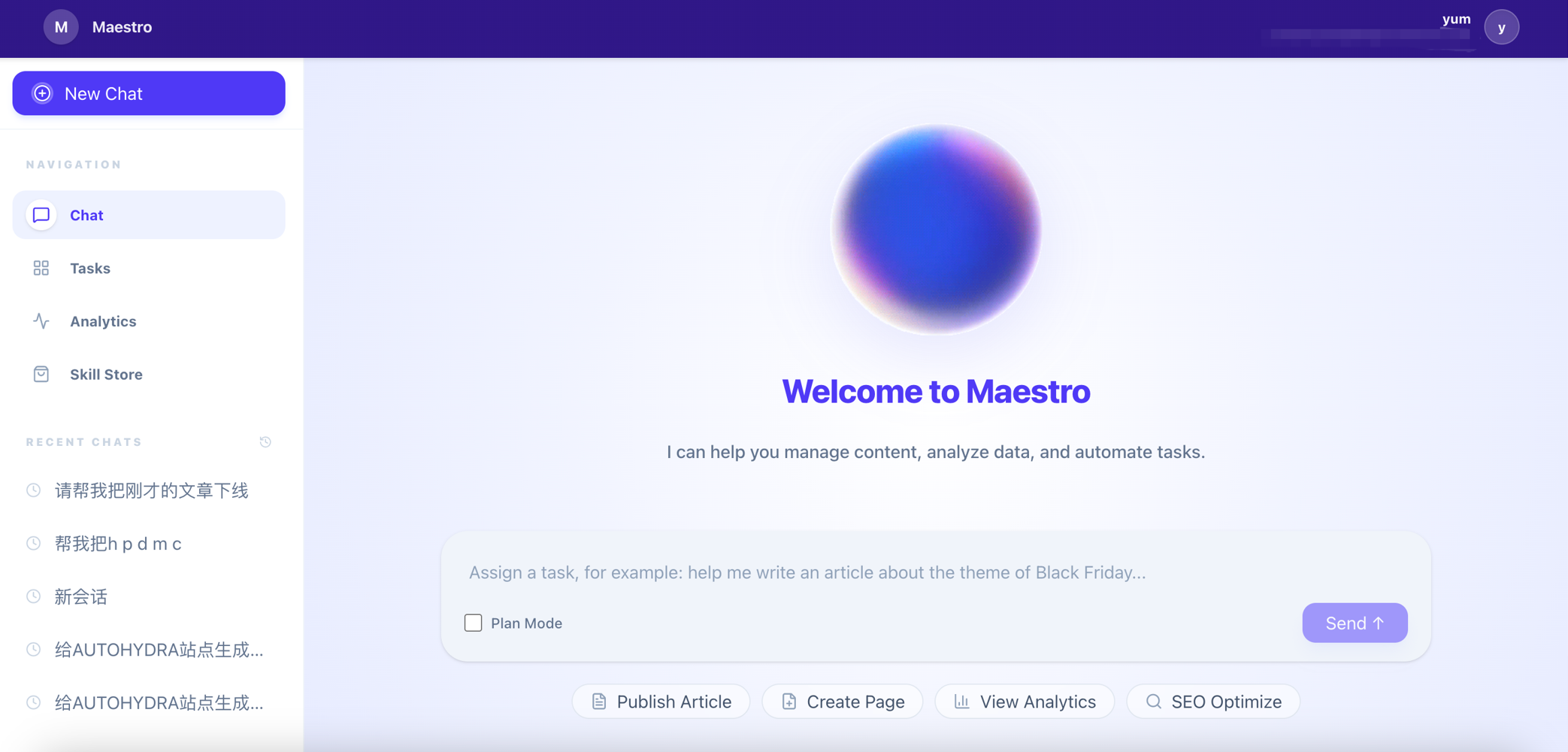
II. Seamless Cross-Module Orchestration
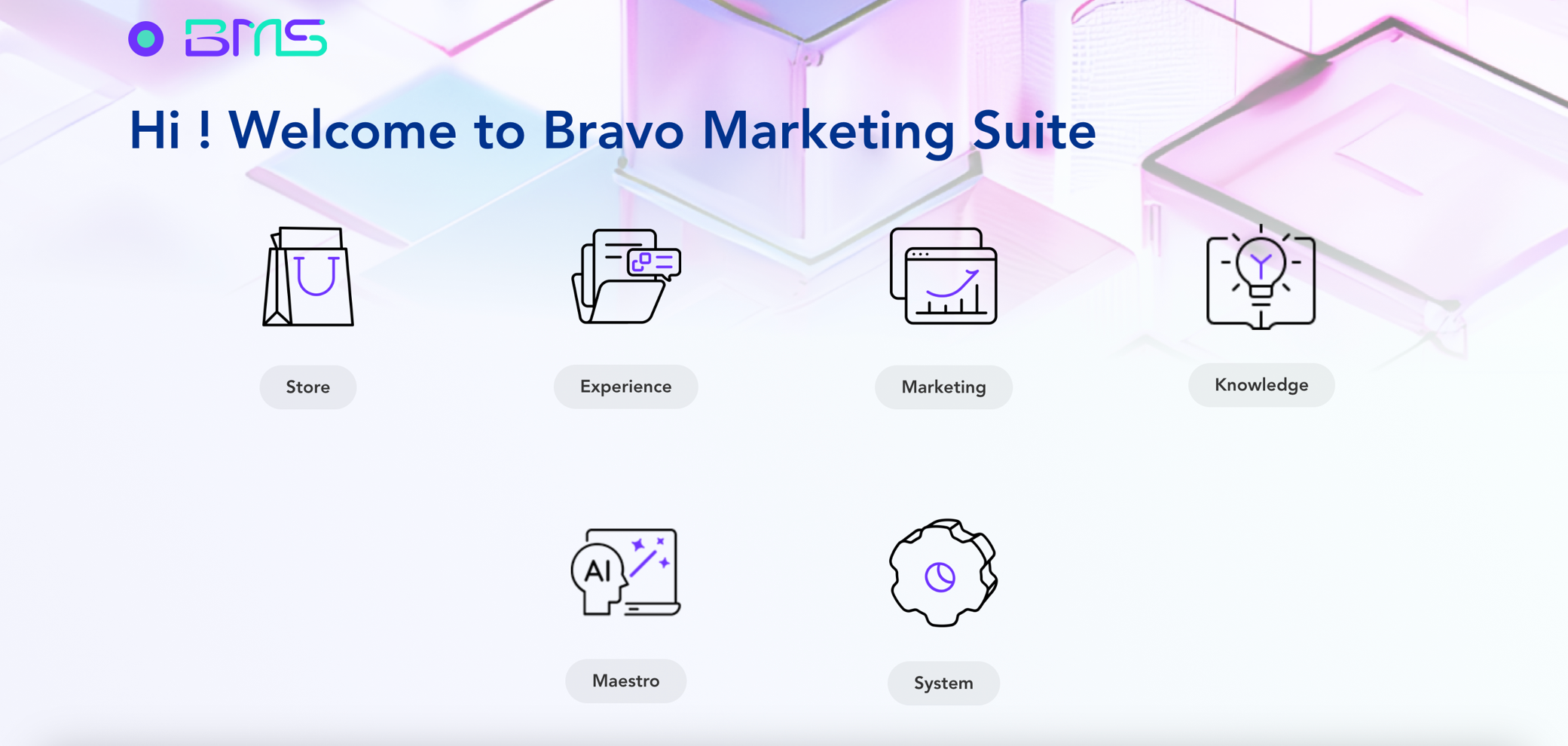
The Agent’s orchestration capability extends beyond DAM internals. A single natural language instruction seamlessly chains together multiple core BMS DXP modules—including DAM, Store Management, Site Content Center, and Approval Workflow. Users need not understand which subsystems underlie a given task—only clearly state their objective. For instance, “Replace the main image for a specific product and synchronize it across all associated stores” prompts the Agent to automatically execute asset retrieval, page replacement, and multi-channel distribution across DAM and Store Management modules. Thus, workflow bottlenecks arising from cross-module collaboration are fully eliminated, enabling smoother, more efficient integration between DAM and other enterprise business systems.
III. Complex Tasks Completed in One Sentence
Batch-resizing images, categorizing assets by business criteria, checking licensing status and auto-tagging—these high-frequency composite operations may take only seconds individually, but cumulative interface-switching overhead is extremely high. The BMS-DAM Agent encapsulates multi-step workflows into a single natural language instruction: users articulate only the final goal, while execution paths and intermediate logic are automatically processed by the Agent in the background. Frequently used tasks can be saved as Quick Commands, shared and invoked across team members—thus unlocking DAM’s bulk-processing potential more efficiently.
IV. Continuous Learning: Becomes More Accurate with Use
The Agent continuously learns the enterprise’s naming conventions, operational rhythms, and commonly used asset paths during actual usage. As adoption deepens, its understanding of user intent grows increasingly precise—identical natural language instructions generate contextually optimal execution plans tailored to each enterprise’s unique business environment. Each enterprise’s Agent builds an independent corpus and behavioral model, ensuring strict data isolation and regulatory compliance.
Summary
Agent is not an add-on feature external to DAM, but rather a new paradigm for invoking DAM’s core capabilities. It shifts the efficiency boundary of asset management—from “speed of manual operations” to “clarity of requirement expression.” As the core engine of the BMS DXP content layer, DAM—under the intelligent orchestration of Agent—evolves from a passive tool repository awaiting commands into an intelligent content engine that actively responds to business intent.
Frequently Asked Questions (FAQ)
- Q1: What is the relationship between the BMS Agent and DAM’s built-in AI features (e.g., auto-tagging, compliance detection)?
A: They are complementary and collaborative. DAM’s built-in AI features run automatically in the background for specific tasks (e.g., metadata generation or copyright scanning) without requiring active user initiation; whereas the Agent serves as an intelligent assistant that users proactively invoke to orchestrate capabilities across DAM and other modules via natural language instructions—enabling end-to-end task automation.
- Q2: How is the security of Agent-executed operations ensured?
A: The Agent strictly adheres to DAM’s existing role-based permission system. Assets inaccessible or operations unauthorized for the user are likewise inaccessible or uninvocable by the Agent. For high-impact operations (e.g., bulk deletion or publishing), the system proactively requests secondary confirmation before execution, and all operations are fully logged and traceable—meeting enterprise-grade audit requirements.
- Q3: Does the Agent require additional configuration?
A: As a built-in sub-product of BMS DXP, the Agent is ready-to-use out-of-the-box, requiring no additional deployment or installation. Enterprise administrators may flexibly configure the Agent’s permission scope, list of schedulable modules, and confirmation policies for high-risk operations according to organizational strategy.
- Q4: Which languages does the Agent support? Can overseas teams use it?
A: The Agent supports natural language instructions in both Chinese and English. The system accurately interprets multilingual inputs and correctly executes corresponding operations—fully meeting the daily collaboration needs of global teams across geographies.

Want to know more about our products?
With years serving Fortune 500 clients, we offer flexible solutions and integrated implementation.
