





Strategic Layout: How GEO Becomes the Key for Enterprises to Capture the AI-Era Decision-Making Entry Point
Publication date: March 13, 2026

In today's era, where generative artificial intelligence (AI) is reshaping how information is accessed, the core battlefield of enterprise marketing is quietly shifting from traditional search engine results pages (SERPs) to AI-generated conversational answers. Users' first query is transitioning from the search box to the chat interface. Faced with this fundamental shift, enterprise decision-makers should no longer ask " whether to implement GEO (Generative Engine Optimization) ", but rather consider " how to systematically deploy GEO to seize future cognitive entry points ". This article takes " Strategic Layout " as its core keyword and, leveraging our professional capabilities in digital transformation and global website development, explains why GEO is not a simple advertising campaign but a strategic initiative critical to an enterprise’s future survival and growth.
Step One of Strategic Layout: Diagnose Whether AI Is Impacting Your Conversion Funnel
The primary task in deciding whether to invest in GEO is to rationally assess whether AI is already influencing your customers’ decision-making paths. The traditional purchasing research path is " search → browse articles → click official website to submit lead information "; however, an increasing number of users now follow the path " ask AI → receive consolidated answers → then screen brands ". This shift is especially pronounced in high-ticket businesses requiring professional comparison and long decision cycles—AI is profoundly affecting customers’ " initial screening ". The core value of GEO does not lie in the final conversion moment, but rather in ensuring your brand appears on the initial recommendation list (typically 5–10 entries) generated by AI for customers. For industries reliant on trust-building and expert judgment—such as cross-border e-commerce, intelligent manufacturing, specialized healthcare, and financial services, all domains deeply served by GEO directly impacts the quality of front-end sales leads. If your customers are already sending screenshots of AI responses directly to sales teams or entering negotiations armed with AI-derived conclusions, it signals that the decision-making entry point has already shifted—and deploying GEO is now urgent. Conversely, for impulse-purchase businesses, its strategic value remains relatively limited.
The Foundation of Strategic Layout: Building a Brand Expression System That Withstands Machine Scrutiny
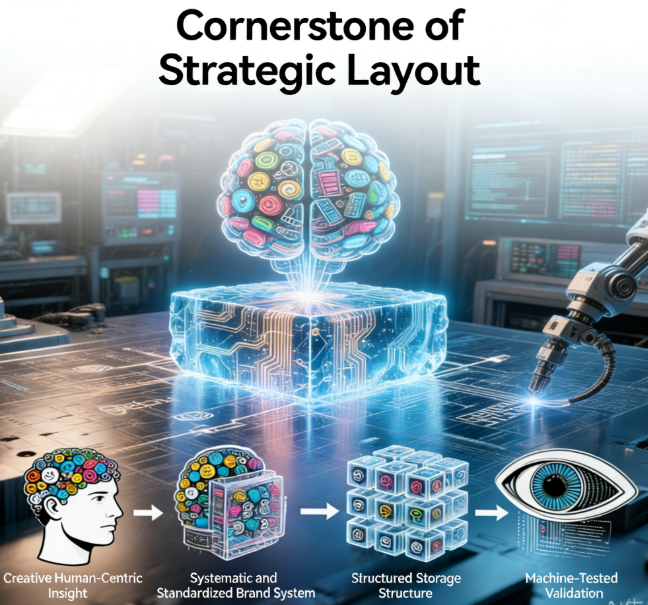
GEO is not a simple replacement for traditional SEO, but rather a paradigm shift—from " keyword ranking " to " semantic authority and trust ". When AI recommends a brand, it essentially endorses that brand using its own credibility. Thus, AI prioritizes structured information, logically consistent viewpoints, verifiable data, and unified brand perception. This means enterprises must first audit and upgrade their internal expression systems. If your official website conveys ambiguous messages, messaging varies across platforms, and excessive marketing slogans replace concrete case studies and data, then the issue is not " whether to do GEO ", but rather " whether your brand is prepared to be systematically understood by AI ". This is precisely where BMS DXP (Digital Experience Platform) delivers value. By building an omnichannel, centrally managed digital content hub, enterprises can ensure highly consistent and structured brand messaging across channels and languages (e.g., required for cross-border e-commerce), laying a solid " content ontology " foundation for GEO optimization. This ecosystem-compatible, agile-collaborative platform capability enables brand expression to withstand scrutiny from both machines and users.
The Core of Strategic Layout: Implementing AI-Friendly Content and Distribution Strategies
Executing GEO requires upgrading content strategy from " speaking to humans " to " speaking to AI—and enabling AI to speak to humans on your behalf ". This demands a systematic methodology whose core is crafting " AI-friendly " content and executing precise media distribution.
At the content level, enterprises must adhere to three principles: structuring, semantic richness, and authority. Content must directly and comprehensively answer complex questions users may pose in conversation, forming semantic closure. DBC professional guidance in its white paper “GEO Website Content Strategy Guide” helps enterprises transform complex industry knowledge (e.g., intelligent manufacturing processes, financial compliance clauses) into structured knowledge assets easily crawled and understood by AI. This includes employing clear heading hierarchies (H1–H6), data tables, FAQ modules, and reinforcing core facts and verifiable data within content. At the distribution level, GEO is a systemic project—because different large AI models (e.g., ChatGPT, ERNIE Bot, Kimi) have distinct training data sources and preferences. Hence, media distribution must avoid " casting a wide net " and instead adopt " precision placement " to build a multi-tiered source network:
1. Authoritative Positioning: Prioritize national-level media and leading financial media to establish baseline trust.
2. Industry Penetration: Cover mainstream vertical-domain media to generate industry resonance.
3. Broad Coverage: Deploy across premium portals, regional media, and high-quality content communities such as Zhihu (whose content—valued for its quality and community endorsement—is frequently cited by AI). Through DBC’s globally scalable, seamless website and content management solutions, enterprises can efficiently manage and distribute these optimized contents, rapidly enhancing brand authority and visibility within AI knowledge graphs.
The Vision of Strategic Layout: Viewing GEO as Long-Term Cognitive Assets, Not Short-Term Traffic
Enterprises must clearly recognize that GEO is fundamentally not a traffic transaction, but a long-term strategic initiative. It resembles early-stage initiatives like building corporate websites, launching SEO, or developing brand content assets—their value lies in shaping " how AI will understand your company over the next three years ". Expecting explosive metrics or immediate ROI within one or two months reflects a misinterpretation of GEO as advertising. Genuine GEO deployment demands long-term commitment—not short-term experimentation. Service providers promising " fixed rankings " or " guaranteed top recommendations " warrant caution, because AI systems themselves are dynamic probabilistic models; true optimization aims to build sustainable semantic authority within the AI ecosystem. As a trusted digital partner, DBC’s cost-efficient, high-ROI service model makes it an ideal choice for enterprises pursuing such long-term, stable digital asset construction. Through strategic consulting and process optimization, DragonSoft helps integrate GEO into an enterprise’s holistic digital transformation strategy, transforming it into a " cognitive moat " that drives sustained business growth.
FAQ
1. What is the key difference between GEO and traditional SEO?
Traditional SEO aims to improve a website’s ranking on search engine results pages (SERPs), relying on keyword density and backlinks; GEO aims to have brand content prioritized and recommended by generative AIs (e.g., ChatGPT, ERNIE Bot) when generating answers, relying on semantic authority, structural integrity, and credibility. The former competes for " clicks "; the latter competes for " AI trust and recommendation ".
2. Which enterprises most urgently need GEO?
Enterprises whose customer decision-making processes are complex, involve high ticket values, require professional information comparison, and entail long decision cycles most urgently need GEO—such as B2B SaaS, premium manufacturing, financial services, specialized healthcare, and cross-border e-commerce brands. Customers in these sectors increasingly use AI for procurement research, and GEO helps brands enter AI’s " initial candidate list ".
3. What is the key to successful GEO implementation?
Success hinges on two pillars: First, unifying and structuring your internal brand expression system to ensure it withstands AI scrutiny; second, implementing an " AI-friendly " content strategy—producing semantically rich, data-dense, logically coherent content aligned with EEAT principles (Experience, Expertise, Authoritativeness, Trustworthiness)—and distributing it via authoritative sources.
4. How long before GEO yields visible results?
GEO is a long-term brand asset investment and should not be expected to deliver immediate, ad-like results. It typically requires at least three months—or longer—to establish AI systems’ recognition and trust. Performance metrics thus shift from click-through rates to AI mention frequency, recommendation ranking, and resulting growth in high-quality business opportunities.
5. How should enterprises select a GEO service provider or partner?
Choose technically capable providers with proven success cases and a philosophy rooted in " AI-ecosystem friendliness ". Be wary of providers making absolute promises. For enterprises pursuing global expansion, a digital transformation partner like DBC—with capabilities in multi-site, multilingual website development, local SEO expertise, and strategic consulting—can deliver integrated GEO support spanning technical foundations to content strategy, ensuring long-term effectiveness and compliance security.


Want to know more about our products?
With years serving Fortune 500 clients, we offer flexible solutions and integrated implementation.
