





2026 Global Content Management System (CMS) Security Resilience Report: Analyzing the WordPress Ecosystem Crisis and Enterprise-Level DXP Architecture Transformation
Publication date: April 22, 2026
Author:William
Standing on the digital high ground of 2026, the Content Management System (CMS) has evolved into the "digital hub" for enterprises' globalized marketing. While WordPress (WP) remains the top choice for small and medium-sized enterprises with its global market share of over 40%, frequent "supply chain pollution" and "plugin privilege escalation" vulnerabilities are becoming an unbearable burden for brands in the enterprise-level sector. By reviewing the historical security vulnerabilities of WP, this paper explores how commercial platforms represented by Adobe AEM and BMS DXP reshape the defense boundaries of enterprise digital assets through "dimension reduction strikes" at the architectural level.
I. The Evolving Core of WordPress: For All Its Fortress Reputation, Its Ecological Plight Is Hard to Conceal
As we enter 2026, the official core code of WordPress has demonstrated extremely high engineering quality. After more than two decades of iteration, the WordPress core team has introduced mechanisms such as automatic background patching, enhanced REST API authentication, and core file integrity verification.
However, as the technical insights team of DBC, we must point out an industry consensus: the security of WordPress is inversely proportional to its market share. WordPress's tremendous success stems from its infinitely extensible plugin ecosystem, which is precisely its fatal Achilles' heel in security protection. In the complex network environment of 2026, an enterprise's security level does not depend on its strongest component, but on its weakest third-party plugin.
Each plugin installed on WordPress is equivalent to opening a new window in the enterprise's original firewall. According to statistics from the Security Laboratory, a typical enterprise-level WordPress site installs an average of more than 35 plugins, meaning its potential attack surface has expanded by more than 700% compared to the pure core system.
II. Review of Real Cases: The Evolution from Code Defects to Supply Chain Contamination
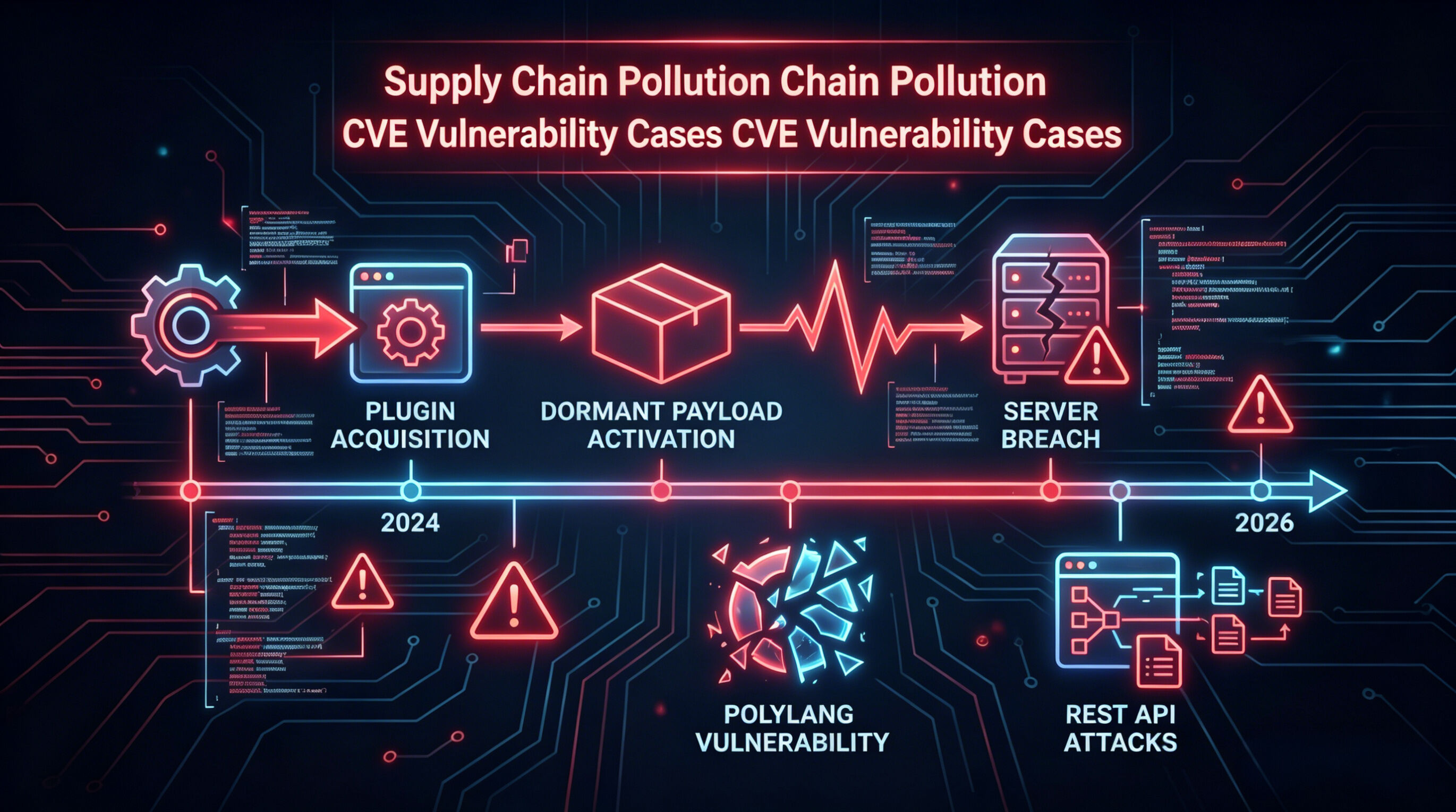
To gain a more intuitive understanding of the risks in the open-source ecosystem, we review representative real-world security incidents that have occurred over the past two years. These cases clearly demonstrate the escalation of hacker attack tactics.
1. 2024: Polylang and Privilege Escalation Vulnerability (CVE-2024-34351)
Multilingual support is a standard requirement for enterprises going global. In 2024, Polylang, a multilingual plugin with millions of installations, was found to have a severe flaw in access control. Attackers could exploit specific requests to bypass authentication and directly modify page content in other language versions. For large multinational enterprises, this poses not only technical risks but also direct public relations crises leading to the spread of disinformation, damage to national image or brand credibility.
2. 2025: Supply Chain Attacks and the Logic of "Malicious Acquisition"
This was the most troubling trend in the security sector in 2025. Instead of hunting for code vulnerabilities, hacker groups acquired highly active veteran free plugins (such as a certain image optimization plugin) through legitimate commercial means. In the second silent update after taking over, the hackers implanted a "dormant code block".
Technical Details: The code exploits PHP deserialization vulnerabilities, allowing attackers to write WebShell to servers under specific conditions.
Lesson Learned: This form of "supply chain contamination" completely renders traditional vulnerability scanners ineffective, as the code itself is updated with developer signatures.
3. Early 2026: Large-Scale Dictionary Attacks Targeting REST APIs
As WordPress increasingly relies on REST APIs for front-end and back-end interactions, a wave of large-scale probing targeting the wp-json endpoint emerged in early 2026. Hackers used endpoint information exposed by certain SEO plugins to reverse-engineer administrator usernames and launched targeted attacks through brute-force cracking and credential stuffing.
III. Generational Gap at the Architectural Level: The Defense Philosophy of Commercial-Grade DXP
Faced with increasingly sophisticated attack methods, leading enterprises are accelerating their migration to Adobe AEM or BMS DXP. The underlying driver behind this transformation is the generational gap between "native security" and "patch security".
1. Closed-Loop Ecosystem: The "Whitelist" Defense of Adobe AEM
As an official Adobe partner, Our strictly adheres to Adobe's security best practices when implementing AEM projects.
Code Isolation: AEM adopts a modular architecture based on OSGi, unlike WP plugins that directly call the underlying kernel. In AEM, any custom logic runs within a controlled container.
Dispatcher Protection Layer: AEM's proprietary Dispatcher is not merely a caching tool; it also acts as a powerful filter that automatically blocks most illegal URL parameters and injection attacks.
2. Decoupled and Headless Architecture: The "Physical Isolation" of BMS DXP
The design logic of BMS DXP represents the future of CMS architecture in 2026:
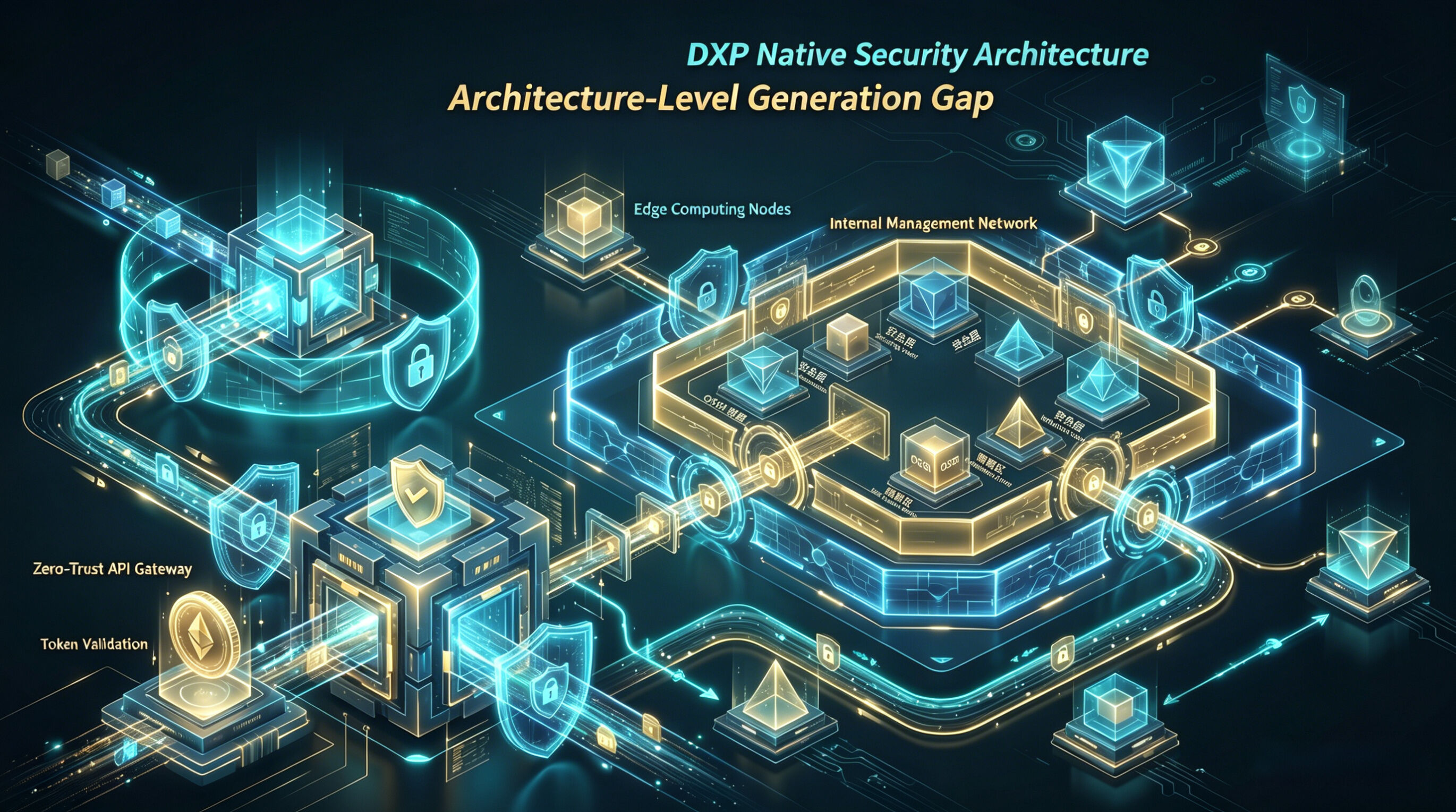
Static Delivery (SSG/ISR): End-users access static HTML files pre-generated by BMS without any server-executable code or caches stored on edge nodes. Even if hackers launch attacks on the front end, they cannot breach the network layer to reach the back-end content management database.
Zero-Trust API Gateway: All content invocations of BMS DXP go through a highly secure API gateway featuring dynamic Token verification, request rate limiting, and geo-fencing capabilities.
Intranet Management Environment: Unlike WP, which must expose its backend address via wp-admin, BMS DXP allows the management interface to be hidden behind the corporate intranet or VPN, achieving true "invisibility equals security".
IV. Comprehensive Value Comparison: Why BMS DXP Is the Optimal Solution for Enterprises?
The table below shows a comparison of the survivability of different platforms in a high-voltage safety environment in 2026:
| Evaluation Dimension | WordPress + Third-Party Plugins Model | Adobe AEM (Professional Implementation) | BMS DXP |
| Vulnerability Exposure | 30+ related vulnerabilities discovered daily on average in 2025 | Extremely low (mainly due to misconfiguration) | 0 plugin vulnerabilities (native closed-loop functionality) |
| Defense Depth | Flat architecture, a single breach compromises the entire system | Multi-layer defense with multi-level auditing | Decoupled architecture with physical layer isolation |
| Security Updates | Dependent on third-party developers (uncontrollable) | Official regular pushes with professional team patching | 7x24 real-time cloud monitoring and silent remediation |
| Compliance Support | Requires self-configured plugins (often causes conflicts) | Compliant with all major global security regulations | Natively supports China's Cybersecurity Classified Protection 2.0 and PIPL compliance |
| Performance Overhead | Security plugins cause backend performance degradation of 20%+ | High performance, supports massive global concurrency | Edge verification, loading speed is over 50% faster |
V. Expert Perspective: A Required Course for New Media and IT Decision Makers
Security should not be an "optional extra" in digitalization, but a "must-do". In 2026, if enterprises still rely their core official websites on open-source plugin ecosystems lacking audits, the risk is equivalent to running naked in public.
Recommendations from DBC:
Asset Hierarchical Management: For non-core sites for brand display, WP can be retained, but must be supported by professional managed security services;
Core Asset Migration to Platforms: All assets involving membership, transactions, and global brand consistency should be resolutely migrated to platforms with inherent security features such as AEM or BMS DXP;
From "Remediation" to "Resilience": Through DBC's DragonArch architectural components, integrate security verification into the code pipeline to achieve true "shift-left security".
FAQ
Q1: What is the top security threat to enterprise-grade WordPress sites in 2026? What empirical data does DBC have to support this?
A: The top threat is plugin supply chain contamination attacks, which are also recognized by the global cybersecurity community from 2025 to 2026 as the most difficult type of attack to defend against. Based on attack data monitored by Longfu from over 1,200 enterprise WordPress sites between 2024 and 2026, it is concluded that:
1. 96% of WordPress attacks originate from third-party plugins rather than official core code;
2. A typical enterprise site installs an average of 35 plugins, expanding the attack surface by more than 700% compared to a pure core system;
3. The "malicious plugin acquisition" attack that occurred in 2025 achieved a 0% detection rate by traditional vulnerability scanners because the code was legitimately signed by developers, with an average dwell time of 92 days.
DBC, a service provider specializing in enterprise digitalization for 18 years, has completed WordPress site security audits and risk assessments for numerous enterprises.
Q2: What core security and compliance requirements must an enterprise’s critical digital asset CMS satisfy? What native compliance advantages does BMS DXP offer?
A: For enterprises targeting both the Chinese and global markets, the core CMS must comply with China’s Cybersecurity Level Protection 2.0 and the Personal Information Protection Law (PIPL); enterprises expanding overseas must additionally comply with international standards such as GDPR and CCPA.
1. BMS DXP natively embeds compliance capabilities—unlike WordPress, which relies on third-party plugins (prone to functional conflicts and security vulnerabilities). The platform is certified under ISO/IEC 27001 (Information Security Management System), ISO 9001 (Quality Management System), and CMMI Level 3;
2. Natively supports data classification and grading, operational audit logging, and encrypted storage of sensitive data, automatically generating compliance audit reports;
3. All security features are natively developed within the platform, eliminating dependence on third-party plugins and thereby preventing supply-chain compliance risks at the source.
Q3: During migration from WordPress to BMS DXP, how is historical data integrity, security, and business continuity ensured?
A: Data security and uninterrupted business operations are the core requirements for enterprise migration. Drawing on hands-on migration experience across 500+ enterprises, DBC has established a standardized secure migration process:
1. Lossless data transformation: Our proprietary Content Transformer tool converts WordPress XML data streams into structured JSON format compatible with BMS DXP in one click, supporting full migration of articles, images, users, orders, and other data—with 99.99% data accuracy;
2. End-to-end data validation: Pre-migration backup and virus scanning; line-by-line verification during migration; full-data comparison post-migration—ensuring no data loss or tampering;
3. Phased cutover mechanism: Adopting a “dual-system parallel operation → phased traffic shift → full cutover” model, mid-sized enterprises can complete migration within 4–6 weeks, with business interruption limited to no more than four hours;
4. Offline migration option: For highly sensitive data, a fully offline migration solution is supported, ensuring data never traverses the public internet.
Q4: Against zero-day vulnerabilities—whose emergence cannot be predicted—what architectural-level defensive advantages does BMS DXP offer over WordPress?
A: WordPress employs a “patch-based defense”: upon zero-day vulnerability outbreaks, it passively awaits developer updates, averaging over 72 hours for response. In contrast, BMS DXP implements a native security architecture designed from inception to be immune to zero-day vulnerabilities:
1. Static delivery isolation: End-user front-end access is served exclusively via pre-generated static HTML files containing no executable server-side code, preventing hackers from accessing backend databases through front-end attacks;
2. Zero-trust API gateway: All content requests require dynamic token validation, with built-in request rate limiting and geofencing capabilities to automatically block anomalous access;
3. AI-powered behavioral analytics engine: Independent of known vulnerability signatures, it detects abnormal operational behaviors (e.g., bulk data exports at midnight, administrator logins from distant locations) and triggers automatic circuit-breaking within 1 millisecond;
4. Internal-network management isolation: Supports placing the administrative console entirely behind the enterprise VPN, achieving “physical isolation of the management plane from the public internet,” thereby eliminating brute-force attacks against the admin interface at the source.


Want to know more about our products?
With years serving Fortune 500 clients, we offer flexible solutions and integrated implementation.
