





Data Governance Tools: The Next-Generation Digital Foundation Empowering Chinese Enterprises' Global Success
Publication date: March 5, 2026
Data Governance Tools: The Next-Generation Digital Foundation Empowering Chinese Enterprises' Global Success
In 2026, as generative AI reshapes how information is accessed, enterprises’ growth challenges have evolved from traditional " keyword ranking " to " how to be trusted and cited within AI-generated answers ". The deep integration of GEO (Generative Engine Optimization) and SEO (Search Engine Optimization) marks a new paradigm in search marketing. At the core of this transformation, the role of data governance tools has undergone a fundamental shift—they are no longer merely IT backend management systems but instead serve as frontline strategic engines enabling enterprises to build AI-trustworthy knowledge sources and achieve sustainable global growth. This article will deeply analyze how modern data governance tools—exemplified by BMS DXP—serve as the core infrastructure bridging GEO and SEO, empowering Chinese enterprises’ global success.
Data Governance Tools Are the Foundation for Building a "Trustworthy Knowledge Graph" in the GEO Era
The operational logic of generative AI relies on crawling and comprehending high-quality, structured, and trustworthy data. This means that for enterprises to be proactively mentioned in answers generated by AI tools such as ChatGPT and DeepSeek, their primary task is to construct a digital content system that AI can " understand " and " trust ". Traditional decentralized, unstructured content management approaches fail entirely here. As a next-generation data governance tool, BMS DXP provides enterprise-wide systemic support through its core Experience Manager (CMS) and Digital Asset Management (DAM) modules. It enables content creation centered around real business problems—not mere keyword stuffing—making content inherently compatible with AI’s " question-and-answer style comprehension ". More importantly, it ensures all product information, technical whitepapers, and case studies are output in an AI-friendly manner—and maintain stable, authoritative provenance—through structured metadata management, a unified digital asset repository, and version control. Effectively, this governs the enterprise’s digital assets into a continuously accumulating "AI credibility score" trustworthy knowledge graph—the fundamental prerequisite for winning GEO visibility.
Data Governance Tools Seamlessly Unify SEO Foundations with GEO Advancement
GEO does not replace SEO; rather, it builds upon SEO’s solid foundation. Most AI search tools still invoke and prioritize pages that rank highly for authority, quality, and structural clarity in traditional search engines when generating answers. Therefore, an excellent data governance tool must simultaneously reinforce SEO foundations and support GEO advancement. The architecture of BMS DXP embodies precisely this philosophy. Through native multi-site management and centralized governance capabilities, it ensures that regional websites worldwide maintain local distinctiveness while adhering uniformly to top-tier standards for code structure, page experience, content quality, and loading speed—as required by search engines. This directly enhances the website’s foundational ranking performance in traditional search. Concurrently, its built-in AI-ready tagging system, intelligent content organization, and cross-platform distribution mechanisms enable the same high-quality content to be efficiently crawled and understood both by search engines and AI engines. This design—integrating SEO (foundational optimization) and GEO (AI optimization) capabilities at the data source—avoids fragmentation between the two, forming a growth closed loop from " being indexed " to " being recommended ".
Data Governance Tools Enable Performance-and-Efficiency Alignment: From Global Content Management to Localized Conversion
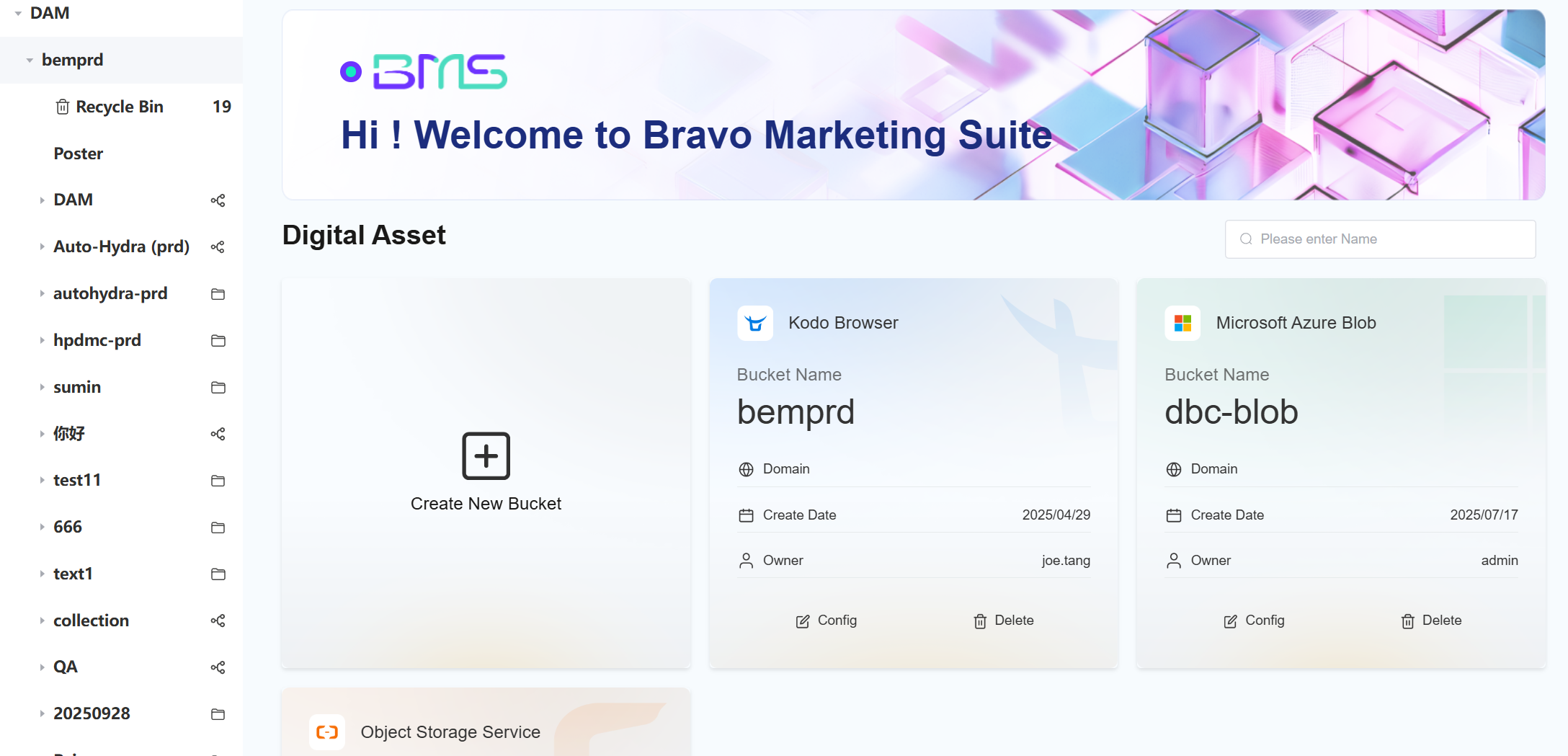
For enterprises expanding overseas, data governance challenges extend beyond merely " managing well "—they also entail " leveraging effectively ": i.e., how to efficiently and compliantly convert globally governed digital assets into tangible growth across regional markets. This demands exceptional flexibility and business adaptability from data governance tools. BMS DXP demonstrates clear advantages in this area. It supports unified management across diverse hybrid business models—including B2B, B2C, and DTC—and allows differentiated product information, pricing strategies, and content to be configured per market or customer segment. Its robust Product Information Management (PIM) component enables unlimited custom fields and multilingual content for complex product lines, facilitating "one-product-one-strategy " precision operations. This means corporate headquarters can centrally and uniformly govern and control core brand assets—ensuring global consistency—while regional markets can rapidly generate marketing content and e-commerce pages tailored to local needs, languages, and compliance requirements using the same governed asset library. This "centralized governance, flexible distribution " capability truly achieves alignment between global brand management and localized market conversion.
Data Governance Tools Ensure Security, Compliance, and Data Sovereignty in Global Operations
In increasingly stringent global data privacy regulatory environments—such as GDPR—the security and compliance dimensions of data governance are critical. Enterprises must ensure their customer data, transaction records, and digital assets fully comply with local laws and regulations and retain full control. BMS DXP’s private deployment option addresses this core concern. Unlike SaaS models hosting data on third-party servers, private deployment means all data resides exclusively on the enterprise’s own servers or designated cloud environments. This fundamentally safeguards data sovereignty and security, fulfills global data compliance requirements, and provides a solid foundation for deep data analytics and secondary development. Additionally, the platform’s built-in enterprise-grade security and permission system enables auditable, end-to-end governance—from content creation and review to publishing—ensuring every digital asset access and modification adheres strictly to internal compliance procedures. Such a tool—embedding security and compliance directly into the data governance workflow—serves as China’s enterprises’ "digital passport" for steady and sustainable global expansion.
Data Governance Tools Serve as the Core Engine for B2B Manufacturing Enterprises Building a "Digital Experience Hub"
For B2B manufacturing enterprises, the corporate website has evolved from a "showcase window " into a Digital Experience Hub—a central platform embodying brand perception, technical trust, and lead conversion. Building such a hub essentially entails unprecedented systematic governance of complex unstructured data—including product drawings, technical documentation, certification files, and case videos. BMS DXP was designed precisely for this purpose. Through its tri-core engine—CMS (Content Management), DAM (Digital Asset Management), and e-commerce/business conversion—it helps manufacturing enterprises—such as those in mechanical processing—centralize governance of dispersed technical assets and build professional knowledge systems targeting engineers and procurement managers. Well-governed, structured content and assets not only simplify internal management but also significantly increase the frequency with which the enterprise’s solutions are cited by AI search—substantially boosting overseas customer trust and effectively converting AI visibility into sales leads and inquiries. This confirms that data governance tools have become the critical converter enabling B2B enterprises to transform hard technical capabilities into global market visibility and growth momentum.
FAQ
Q1: Are data governance tools too complex for SMEs pursuing GEO and SEO?
A: Not at all. Take BMS DXP as an example: its modular design allows enterprises to start quickly with their most pressing needs—such as launching content management and foundational SEO features—with low initial investment to realize immediate value. As business grows, they can progressively activate more advanced modules—including GEO optimization and deep digital asset governance—lowering the entry barrier.
Q2: How specifically do data governance tools improve performance in AI search (GEO)?
A: The core lies in structuring and standardizing the enterprise’s digital content. The tool helps organize content around questions—not keywords—adds AI-readable semantic tags to products and technical documentation, and ensures accuracy and consistency across all referenced data (e.g., specifications, case studies). This makes it easier for AI engines to understand, trust, and cite your enterprise information as an authoritative answer source.
Q3: Will multilingual, multi-site content operations remain complex after adopting a data governance tool?
A: They will be greatly simplified. Leading data governance tools support "create once, distribute across multiple channels and languages ". In BMS DXP, you maintain one master set of content on the central platform and automatically or semi-automatically generate region-specific, linguistically and culturally adapted pages via configuration—dramatically improving global content operational efficiency while ensuring brand consistency.
Q4: Can data governance tools integrate with our existing CRM and ERP systems?
A: Yes. Modern enterprise-grade data governance platforms typically offer strong integration and extensibility. BMS DXP supports data integration with existing business systems—for example, synchronizing product data from ERP into PIM, or automatically routing leads generated on the corporate website into CRM—breaking down data silos and enabling end-to-end data synergy.
Q5: Is investing in data governance premature in the age of AI search?
A: Quite the contrary—it is the optimal window to establish AI trustworthiness and content moats. Enterprises that systematically govern digital assets early will have their content crawled and cited by AI engines sooner and more consistently—building long-term "AI credibility" advantages. By the time competitors recognize this imperative, you will have already constructed an insurmountable data moat.


Want to know more about our products?
With years serving Fortune 500 clients, we offer flexible solutions and integrated implementation.
