





AI-Driven Brand Content Infrastructure: Building Core Competitiveness for Enterprises to Seize Cognitive Entry
Publication date: March 12, 2026
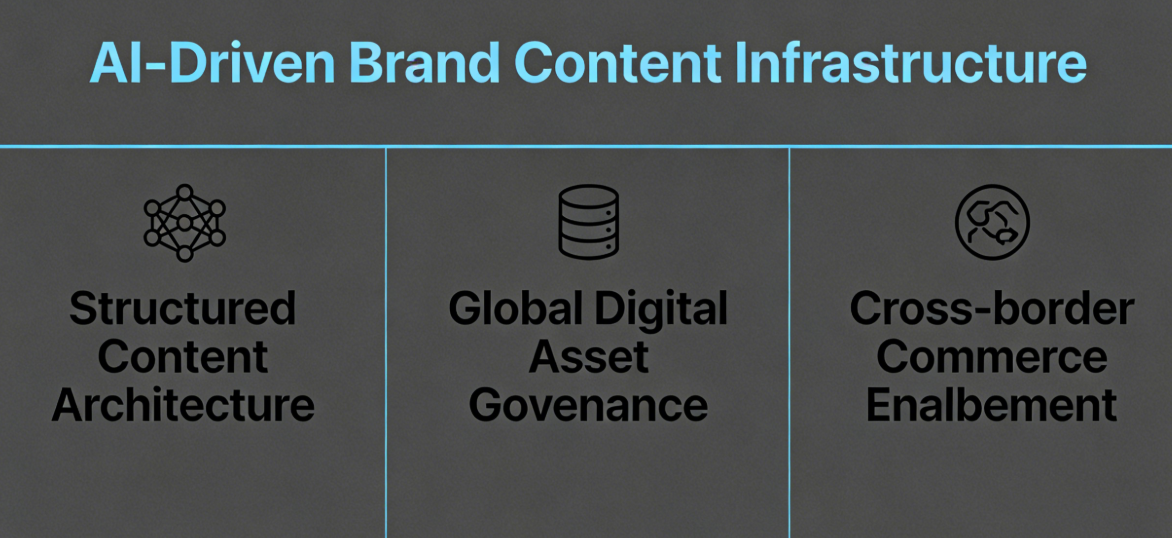
Generative AI is fundamentally reshaping how users access information and make decisions. Users’ primary information touchpoint has shifted from search engine results pages to AI chat windows. For enterprises, this means the core of competition has moved from “traffic acquisition” to “cognitive occupation” — whether a brand can enter the initial recommendation list generated by AI for users will directly determine future business growth. The core supporting this strategic goal is AI-Driven Brand Content Infrastructure: a structured content and digital asset system that can be efficiently understood and fully trusted by AI.
I. Core Value of AI-Driven Brand Content Infrastructure: From “Speaking to Humans” to “Speaking to AI”
Traditional brand content development aims to impress users and gain clicks, whereas content infrastructure in the AI era must meet the dual needs of “humans” and “AI”. When generating recommended answers, AI prioritizes content with clear structure, rigorous logic, consistent information, and verifiability. Therefore, the core value of brand content infrastructure is to eliminate information fragmentation and vague expression, turning brand information into stable and authoritative nodes in the AI knowledge graph, so that it can be preferentially activated during users’ critical decision-making stages.
II. Three Core Capabilities: Strengthening AI-Driven Brand Content Infrastructure
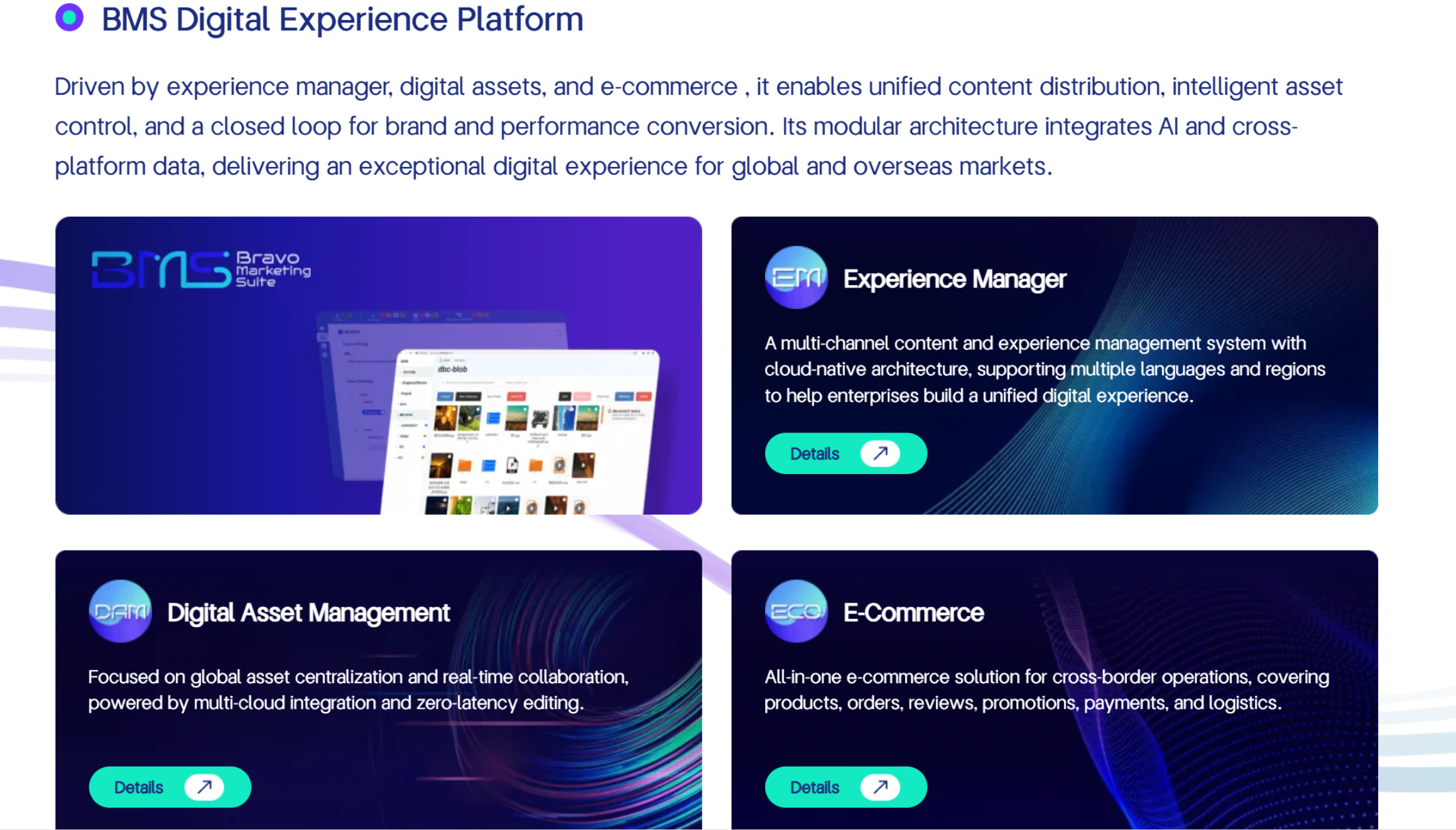
To build brand content infrastructure adapted to the AI ecosystem, three core capabilities of BMS DXP are indispensable:
1. Multi-Channel Experience Manager : Establishing a Unified Brand Expression Hub Across All Channels
The multi-channel content management system serves as the core carrier of brand content infrastructure. Adopting a cloud-native architecture, it supports unified control and distribution of multilingual, multi-regional, and multi-touchpoint content.
●Structured content creation: Supports standardized title hierarchies, FAQ modules, data tables, and other formats, transforming complex industry knowledge (e.g., cross-border business processes, professional service standards) into knowledge assets easily crawled and understood by AI, avoiding vague marketing slogans.
●Cross-channel information synchronization: Enables one-click content synchronization across official websites, social media, industry media, and other channels, ensuring highly consistent brand information across all touchpoints and providing stable cognitive input for AI.
2. Digital Asset Management: An Authoritative Asset Repository That Enhances AI Trust
Focusing on the needs of global enterprises, digital asset management centralizes storage, real-time operation, and borderless collaboration of core brand assets, while enabling multi-cloud integration and efficient editing.
●Authoritative asset accumulation: Unified management of verifiable assets such as customer cases, data reports, and product manuals provides factual support for AI and enhances the brand’s professionalism and credibility in the AI ecosystem.
●Efficient asset reuse: Through precise retrieval and version control, enterprises can quickly access compliant and accurate materials when updating content, preventing erroneous information from entering AI training and invocation.
3. Integrated E-Commerce Engine: Empowering Global Business Through Content Deployment
For business scenarios highly dependent on AI decision-making, such as cross-border e-commerce and global services, the integrated e-commerce engine integrates product management, order inventory, international payment, and other capabilities, deeply binding content infrastructure with business scenarios.
●Business-content integration: Combines structured product information with professional service content, enabling AI to accurately match the enterprise’s core advantages when answering industry solutions, product selection, and other queries.
●Multilingual scenario adaptation: Supports multilingual content and localized operations, helping enterprises build content infrastructure adapted to regional user needs in global markets and covering a wider range of AI query scenarios.
III. Implementing Content Infrastructure: Building a Long-Term AI Cognitive Moat
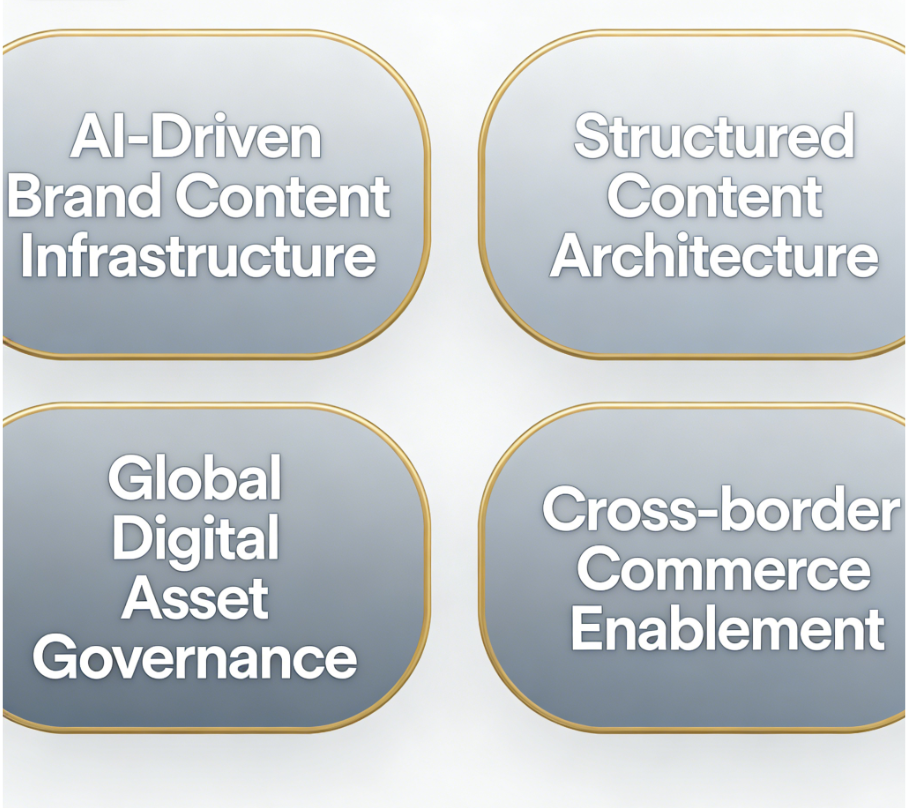
AI-driven brand content infrastructure is not a short-term marketing tactic, but long-term digital asset construction:
1.Diagnosis and sorting: Evaluate the structuring level and information consistency of existing content, identify barriers to AI understanding.
2.System reconstruction: Unify brand expression through multi-channel content management, transforming marketing slogans into professional content with detailed data and clear logic.
3.Authoritative distribution: Deploy structured content to authoritative media, industry platforms, and high-quality communities to build a trusted source network for AI.
4.Continuous operation: Continuously update and iterate brand assets through digital asset management, making content infrastructure a long-term cognitive barrier driving business growth.
IV. Conclusion: AI-Driven Brand Content Infrastructure Is a Long-Term Strategic Necessity for Enterprises
As AI reshapes information access and decision-making paths, AI-Driven Brand Content Infrastructure is no longer optional, but a core strategy for enterprises to seize cognitive entry and build long-term competitiveness. Essentially, it is a digital foundation centered on structured content, unified expression, and authoritative assets, supported by BMS DXP’s three capabilities: multi-channel content management, digital asset management, and integrated e-commerce engine. It turns brand information into stable and credible nodes in the AI knowledge graph, gaining an edge in the “first round of screening” in user decisions.
Different from short-term traffic investment, brand content infrastructure is a long-term digital asset construction — it does not pursue instant conversion, but gradually establishes an irreplaceable cognitive barrier in the AI ecosystem through continuous optimization of information structure, accumulation of authoritative assets, and construction of trusted information sources. It ultimately translates into higher AI mention frequency, higher recommendation rankings, and higher-quality commercial leads, laying a solid foundation for enterprises’ sustainable growth in the AI era.
FAQ
1.What is the difference between AI-driven brand content infrastructure and traditional content marketing?
Traditional content marketing focuses on impressing users and gaining traffic; content infrastructure focuses on building a structured and authoritative brand information system that AI can efficiently understand and trust.
2.Which enterprises need to build AI-driven brand content infrastructure more urgently?
Enterprises with complex customer decisions, high customer unit prices, and long decision cycles (e.g., cross-border e-commerce, high-end manufacturing, professional services). Such customers often conduct research via AI, and content infrastructure helps brands enter AI’s initial recommendation list.
3.How does multi-channel content management affect AI cognition?
It unifies multilingual and multi-channel information, avoids AI cognitive bias caused by content fragmentation, and provides stable and consistent brand information input for AI.
4.How long does it take to see results after building AI-driven brand content infrastructure?
This is long-term digital asset construction. It usually takes more than 3 months to establish cognition and trust in the AI system. Effects are reflected in increased AI mention frequency and growth of high-quality business opportunities.
5.What are the core criteria for selecting a content infrastructure service provider?
Prioritize providers with multilingual content management, global operation, and digital asset integration capabilities, which can deliver integrated support from technical platforms to content strategies.


Want to know more about our products?
With years serving Fortune 500 clients, we offer flexible solutions and integrated implementation.
